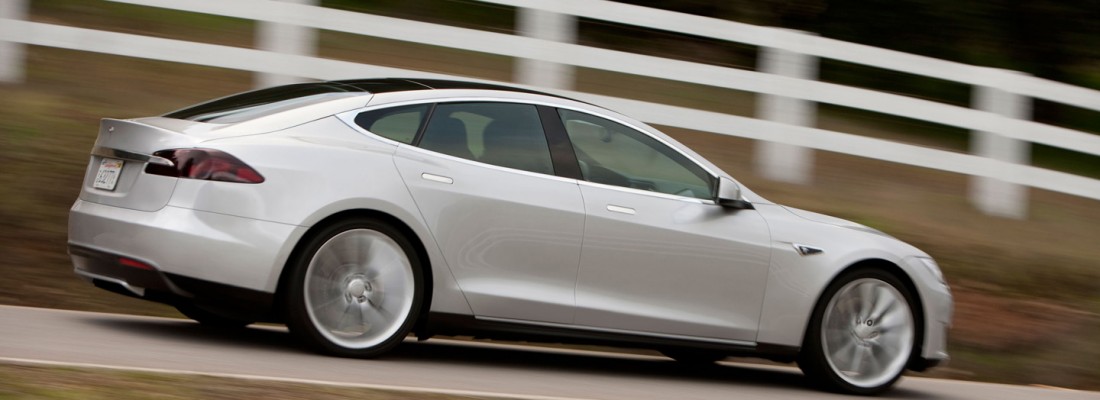
Tesla Model S P85 vs 2008 Mitsubishi Evo GSR – Standing Start [VIDEO]

More Tesla Model S street racing from the guys at Drag Times. This time they're racing the Model S Performance against a 2008 Mitsubishi Evo is running 25 psi boots with a full turbo back exhaust, tune, intake and upgraded clutch.

This race is from a standing start with the Evo using a 5,500 rpm Launch control to build turbo boost while stationary.

Graphene-Based Supercapacitors Improve Energy Density by 12x

Monash University (Australia) researchers have brought next generation energy storage closer with an engineering first - a graphene-based device that is compact, yet lasts as long as a conventional battery.

Published today in Science, a research team led by Professor Dan Li of the Department of Materials Engineering has developed a completely new strategy to engineer graphene-based supercapacitors (SC), making them viable for widespread use in renewable energy storage, portable electronics and electric vehicles.

SCs are generally made of highly porous carbon impregnated with a liquid electrolyte to transport the electrical charge. Known for their almost indefinite lifespan and the ability to re-charge in seconds, the drawback of existing SCs is their low energy-storage-to-volume ratio - known as energy density. Low energy density of five to eight Watt-hours per litre, means SCs are unfeasibly large or must be re-charged frequently.

Professor Li's team has created an SC with energy density of 60 Watt-hours per litre - comparable to lead-acid batteries and around 12 times higher than commercially available SCs.

"It has long been a challenge to make SCs smaller, lighter and compact to meet the increasingly demanding needs of many commercial uses," Professor Li said.

Graphene, which is formed when graphite is broken down into layers one atom thick, is very strong, chemically stable and an excellent conductor of electricity.

To make their uniquely compact electrode, Professor Li's team exploited an adaptive graphene gel film they had developed previously. They used liquid electrolytes - generally the conductor in traditional SCs - to control the spacing between graphene sheets on the sub-nanometre scale. In this way the liquid electrolyte played a dual role: maintaining the minute space between the graphene sheets and conducting electricity.

Unlike in traditional 'hard' porous carbon, where space is wasted with unnecessarily large 'pores', density is maximised without compromising porosity in Professor Li's electrode.

To create their material, the research team used a method similar to that used in traditional paper making, meaning the process could be easily and cost-effectively scaled up for industrial use.

"We have created a macroscopic graphene material that is a step beyond what has been achieved previously. It is almost at the stage of moving from the lab to commercial development," Professor Li said.

Graphene-Based Supercapacitors Improve Energy Density by 12x

Monash University (Australia) researchers have brought next generation energy storage closer with an engineering first - a graphene-based device that is compact, yet lasts as long as a conventional battery.

Published today in Science, a research team led by Professor Dan Li of the Department of Materials Engineering has developed a completely new strategy to engineer graphene-based supercapacitors (SC), making them viable for widespread use in renewable energy storage, portable electronics and electric vehicles.

SCs are generally made of highly porous carbon impregnated with a liquid electrolyte to transport the electrical charge. Known for their almost indefinite lifespan and the ability to re-charge in seconds, the drawback of existing SCs is their low energy-storage-to-volume ratio - known as energy density. Low energy density of five to eight Watt-hours per litre, means SCs are unfeasibly large or must be re-charged frequently.

Professor Li's team has created an SC with energy density of 60 Watt-hours per litre - comparable to lead-acid batteries and around 12 times higher than commercially available SCs.

"It has long been a challenge to make SCs smaller, lighter and compact to meet the increasingly demanding needs of many commercial uses," Professor Li said.

Graphene, which is formed when graphite is broken down into layers one atom thick, is very strong, chemically stable and an excellent conductor of electricity.

To make their uniquely compact electrode, Professor Li's team exploited an adaptive graphene gel film they had developed previously. They used liquid electrolytes - generally the conductor in traditional SCs - to control the spacing between graphene sheets on the sub-nanometre scale. In this way the liquid electrolyte played a dual role: maintaining the minute space between the graphene sheets and conducting electricity.

Unlike in traditional 'hard' porous carbon, where space is wasted with unnecessarily large 'pores', density is maximised without compromising porosity in Professor Li's electrode.

To create their material, the research team used a method similar to that used in traditional paper making, meaning the process could be easily and cost-effectively scaled up for industrial use.

"We have created a macroscopic graphene material that is a step beyond what has been achieved previously. It is almost at the stage of moving from the lab to commercial development," Professor Li said.

A week with the Mitsubishi iMiEV Plug-In Electric Car

Mitsubishi Australia were generous enough to recently loan EV News an iMiEV for a week.

On sale in Australia since 2010, the Mitsubishi iMiEV is based on a Japanese Kei class Mitsubishi I that was first released in 2006.

The iMiEV has the same sized lithium ion battery (16 kWh) as the Holden Volt but because it is a much smaller car and doesn't cart around a full sized 1.4 Lt petrol engine range extender the iMiEV weighs only 1,080 kg Vs 1,715 kg for the Volt. Where the Volt routinely achieves 70 - 80 km from a full charge in EV mode the book spec for the iMiEV is 155 km which is approximately twice the distance for the same battery capacity.

For a 5 door hatchback with only 47 kw (63 hp) and 180 Nm (133 lb/ft) from it's BLDC permanent magnet electric motor mated to a 7.065:1 single speed reduction gearbox, acceleration, while not startling off the line, is very impressive above 50 km/h right up to the cars top speed of 130 km/h. The combination of small road foot print and brilliant mid-speed acceleration brings a whole new dimension to 'gap-shooting' in heavy urban traffic.

The iMiEV's dash board instruments aren't as flash as a Volt with a basic set of segmented LCD meters instead of the all-singing all-dancing colour graphics of the Volt, but the relevant information like State Of Charge (SoC), energy consumption and predicted range are all present.

During our week long test drive we didn't quite get a handle on the algorithm behind the iMiEVs range meter. Driving the iMiEV on surface roads at speeds below 60 km/h with the 'gear' selector in the 'B' maximum brake regeneration position, it was possible to not only travel many kilometers without the indicated range changing at all, but we even managed to leave one morning with a full change indicating 106 km range and travelled to our destination 24 km away having used 2 bars on the battery meter (12.5%) with predicted range having gone UP to 113km by the time we arrived?

While low speed urban driving is definitely the iMiEV's forte, high speed motorways are not. We all know that aerodynamic drag increases in proportion to the square of speed ie doubled speed results in four times as much drag. Unfortunately, despite the blunt nose and steeply raked windscreen the iMiEV's coefficient of drag is no better than a large family sedan @ 0.33 Cd. We even double checked by multiplying the frontal cross sectional area to get the CdA figure but the result was still about equal.

Aside from the fact it doesn't have a cruise control which is unusual for a modern car, the range meter plummets when driven for sustained periods above 100 km/h. This serves as a graphic illustration of the extra loads ALL cars face at higher speeds. It only becomes much more noticeable in the iMiEV because a/ The battery capacity is equivalent to having a 1.5 litre fuel tank (petrol contains 10 kWh per litre) b/ ICE cars are so inefficient at low speeds compared to the iMiEV the difference between high and low speed fuel consumption of an ICE car isn't as noticeable as with the iMiEV.

Like Charging an iPhone

Here in Australia 240 VAC is the standard voltage that all appliances run off so the iMiEV can be fully changed in 8 hours using a standard 10 amp supply (although the iMiEV lead has a 15A plug). In the week we had the car we never used much more than ½ the battery on any given day of running errands so plugging it in for a 4 hour re-charge didn't seem much different to plugging in the iPhone / iPad on a daily basis.

The iMiEV has 2 charge sockets, one on either side of the car, with 240v on the drivers (right) side and a large CHAdeMO charger socket under the left hand side filler flap.

In order to test how practical fast charging is we took a drive to the the NRMA DC Fast Charger installed across the road from their North Strathfield head office. Arriving with 55% charge remaining the battery quickly accepted the 359 volts / 125 amps on offer and was topped up to 80% in 11 minutes flat. While the NRMA fast charger is located near a popular restaurant/cafe precinct, and is free of charge to use, 10 minutes isn't even enough time for a coffee although a full 20 min charge might allow enough time for a stroll to get a cappuccino.

With an introduction price of A$65,000, which was reduced to A$48,880 in 2011, the Mitsubishi iMiEV hasn't exactly been selling like hot cakes with only 227 cars delivered locally. Yet 33,000 have been sold worldwide including Peugeot and Citroen versions with Japan, France and Norway being the top selling countries.

Mitsubishi Australia are now selling the last of their 70 remaining iMiEVs and have no plans to order more unless there is customer demand. Dealers have reduced the new price to A$24,990 with rumours doing the rounds that an ex-demo with 10k on the clock can be had for as little as A$20k.

Sure it is a first generation EV in a market where the technology is evolving rapidly, but with local fuel prices currently above 2008 levels and oil prices having just passed A$120, anything electrically powered is looking better by the day.

I certainly wasn't keen to return the iMiEV, which cost approx $2.00 a day to charge, to resume pumping the usual $80 worth of fuel per week. Anyone with a roof-top PV solar system should be giving an iMiEV serious consideration as they can dramatically shorten the payback period of the PV system by eliminating fuel costs instead of utility bills and effectively power the iMiEV free of charge for the next 10-20 years. The EV grin as you drive past $1.70/Lt fuel billboards is almost priceless.

A week with the Mitsubishi iMiEV Plug-In Electric Car

Mitsubishi Australia were generous enough to recently loan EV News an iMiEV for a week.

On sale in Australia since 2010, the Mitsubishi iMiEV is based on a Japanese Kei class Mitsubishi I that was first released in 2006.

The iMiEV has the same sized lithium ion battery (16 kWh) as the Holden Volt but because it is a much smaller car and doesn't cart around a full sized 1.4 Lt petrol engine range extender the iMiEV weighs only 1,080 kg Vs 1,715 kg for the Volt. Where the Volt routinely achieves 70 - 80 km from a full charge in EV mode the book spec for the iMiEV is 155 km which is approximately twice the distance for the same battery capacity.

For a 5 door hatchback with only 47 kw (63 hp) and 180 Nm (133 lb/ft) from it's BLDC permanent magnet electric motor mated to a 7.065:1 single speed reduction gearbox, acceleration, while not startling off the line, is very impressive above 50 km/h right up to the cars top speed of 130 km/h. The combination of small road foot print and brilliant mid-speed acceleration brings a whole new dimension to 'gap-shooting' in heavy urban traffic.

The iMiEV's dash board instruments aren't as flash as a Volt with a basic set of segmented LCD meters instead of the all-singing all-dancing colour graphics of the Volt, but the relevant information like State Of Charge (SoC), energy consumption and predicted range are all present.

During our week long test drive we didn't quite get a handle on the algorithm behind the iMiEVs range meter. Driving the iMiEV on surface roads at speeds below 60 km/h with the 'gear' selector in the 'B' maximum brake regeneration position, it was possible to not only travel many kilometers without the indicated range changing at all, but we even managed to leave one morning with a full change indicating 106 km range and travelled to our destination 24 km away having used 2 bars on the battery meter (12.5%) with predicted range having gone UP to 113km by the time we arrived?

While low speed urban driving is definitely the iMiEV's forte, high speed motorways are not. We all know that aerodynamic drag increases in proportion to the square of speed ie doubled speed results in four times as much drag. Unfortunately, despite the blunt nose and steeply raked windscreen the iMiEV's coefficient of drag is no better than a large family sedan @ 0.33 Cd. We even double checked by multiplying the frontal cross sectional area to get the CdA figure but the result was still about equal.

Aside from the fact it doesn't have a cruise control which is unusual for a modern car, the range meter plummets when driven for sustained periods above 100 km/h. This serves as a graphic illustration of the extra loads ALL cars face at higher speeds. It only becomes much more noticeable in the iMiEV because a/ The battery capacity is equivalent to having a 1.5 litre fuel tank (petrol contains 10 kWh per litre) b/ ICE cars are so inefficient at low speeds compared to the iMiEV the difference between high and low speed fuel consumption of an ICE car isn't as noticeable as with the iMiEV.

Like Charging an iPhone

Here in Australia 240 VAC is the standard voltage that all appliances run off so the iMiEV can be fully changed in 8 hours using a standard 10 amp supply (although the iMiEV lead has a 15A plug). In the week we had the car we never used much more than ½ the battery on any given day of running errands so plugging it in for a 4 hour re-charge didn't seem much different to plugging in the iPhone / iPad on a daily basis.

The iMiEV has 2 charge sockets, one on either side of the car, with 240v on the drivers (right) side and a large CHAdeMO charger socket under the left hand side filler flap.

In order to test how practical fast charging is we took a drive to the the NRMA DC Fast Charger installed across the road from their North Strathfield head office. Arriving with 55% charge remaining the battery quickly accepted the 359 volts / 125 amps on offer and was topped up to 80% in 11 minutes flat. While the NRMA fast charger is located near a popular restaurant/cafe precinct, and is free of charge to use, 10 minutes isn't even enough time for a coffee although a full 20 min charge might allow enough time for a stroll to get a cappuccino.

With an introduction price of A$65,000, which was reduced to A$48,880 in 2011, the Mitsubishi iMiEV hasn't exactly been selling like hot cakes with only 227 cars delivered locally. Yet 33,000 have been sold worldwide including Peugeot and Citroen versions with Japan, France and Norway being the top selling countries.

Mitsubishi Australia are now selling the last of their 70 remaining iMiEVs and have no plans to order more unless there is customer demand. Dealers have reduced the new price to A$24,990 with rumours doing the rounds that an ex-demo with 10k on the clock can be had for as little as A$20k.

Sure it is a first generation EV in a market where the technology is evolving rapidly, but with local fuel prices currently above 2008 levels and oil prices having just passed A$120, anything electrically powered is looking better by the day.

I certainly wasn't keen to return the iMiEV, which cost approx $2.00 a day to charge, to resume pumping the usual $80 worth of fuel per week. Anyone with a roof-top PV solar system should be giving an iMiEV serious consideration as they can dramatically shorten the payback period of the PV system by eliminating fuel costs instead of utility bills and effectively power the iMiEV free of charge for the next 10-20 years. The EV grin as you drive past $1.70/Lt fuel billboards is almost priceless.

Evans Electric Unveils AWD In-Wheel Motor powered electric car

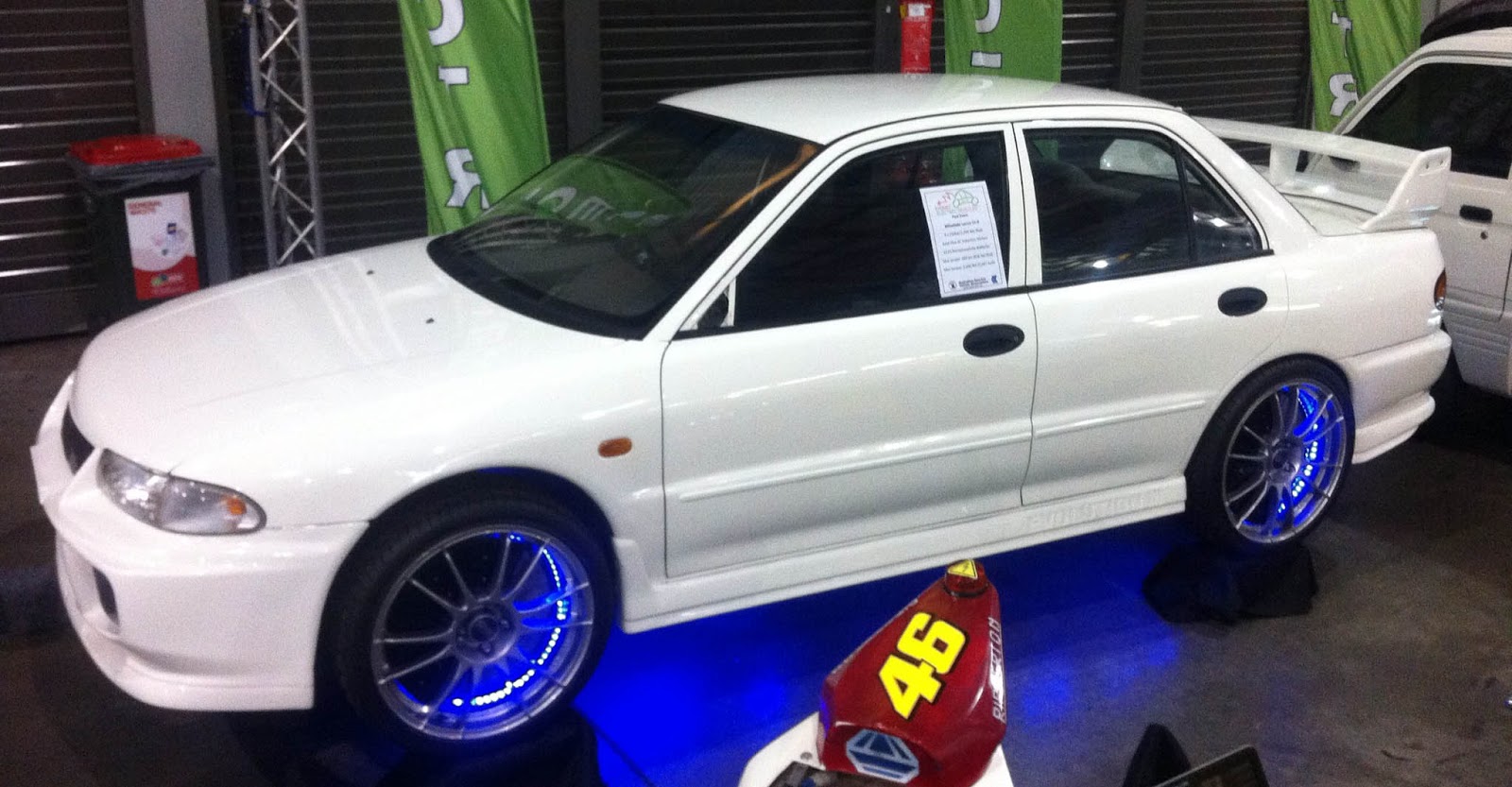
Australia based start-up company Evans Electric have unveiled an All Wheel Drive In-Wheel Motor powered Lancer Evo 3 during Meguiar's MotorEx at Sydney Olympic Park

The 4 door sedan with World Rally Championship pedigree features a direct drive, disc type electric motor in each of it's 19” wheels. Each Axial Flux 3 phase AC Induction wheel motor has a nominal output of 75 kw and 625 Nm of torque with a peak output of 150 kw and 1,250 Nm giving the vehicle a total peak output of 600 kw (800 hp) and 5,000 Nm.

While the torque figure could at first glance appear fantastic, standard automotive industry practice only quotes torque at the flywheel not at the wheels. As an example the Tesla Model S Performance has a quoted peak motor torque of 600 Nm. With a single speed reduction gear ratio of 9.73:1 that equates to a total of 5,838 Nm (minus gearing losses) at the wheels. The Evans Electric motors are direct drive, so the rotor turns at the same speed as the wheel. Instead of mechanical reduction gearing, they are electrically geared using an 8 pole stator winding configuration.

Direct drive wheel motors eliminate mechanical transmission losses allowing up to 85% of a vehicle's kinetic energy to be recoverable during braking. Maximising brake regeneration lowers a vehicles over-all energy consumption potentially leading to more range per kWh of battery capacity or the use of a smaller battery pack for similar range. As the battery is the single most expensive component in an EV this could lead to lower cost electric cars.

The Evans Electric in-wheel motors enable non-contact electromagnetic braking, replacing hydraulic friction brake systems which are 99% redundant in current generation electric/hybrid vehicles. Using only the wheel motors, the car can brake at greater than 1G.

Evans Electric hold a patent for a vehicle drive system using wheel motors for propulsion and braking, the most impressive feature of which is that safety and vehicle dynamics features such as ABS, stability control, traction control, brake steer, active brake bias, torque vectoring, intelligent cruise control, emergency brake assist and collision avoidance all become customisable and upgradable software functions.

When these systems are combined with wheel motors they allow a new level of performance based active yaw control that unlike most current stability control systems (which only activate in an emergency situation) are active at all times, dynamically fine tuning understeer and oversteer to enhance cornering speed and safety.

After an extensive period of wheel motor validation testing and power electronics development the company has met with several automotive Tier 1 suppliers to discuss collaboration &/or licensing to move the project from proof of concept to commercial product development.

Final preparations are under way with track testing expected to commence by the time the Bathurst 1000 rolls around in October.

Cadillac ELR Goes Ultrasonic in Pursuit of High Quality

Ultrasonic welding, a high-tech manufacturing process used in the aerospace and medical industries, is helping ensure high quality for the new Cadillac ELR extended-range electric luxury coupe that goes on sale in North America in early 2014.

Ultrasonic welding’s key advantage is exceptional and predictable quality and performance from one battery pack to the next. Every ELR battery, for example, has close to 200 ultrasonic welds. Each is required to meet stringent quality requirements, enabling Cadillac to offer an eight-year/100,000-mile battery system warranty.

Short cycle times, low capital costs and manufacturing flexibility through the use of automation are other advantages of ultrasonic welding.

“Ultrasonic welding is a far superior joining technology in applications where it can be deployed,” said Jay Baron, president and CEO of the Center for Automotive Research in Ann Arbor, Mich. “Cadillac’s innovative process will produce batteries with superior quality compared with traditional methods – and do it more efficiently. This is one example of technology development that is becoming pervasive in today’s world class vehicles.”

General Motors’ Brownstown Battery Assembly plant near Detroit, uses ultrasonic welding to join metal electrode tabs on ELR’s advanced 16.5-kWh lithium-ion battery system, and does it with a proprietary quality monitoring process. Brownstown uses an automated system to execute millions of these welds each year.

Ultrasonic welding uses specialized tools called an anvil and horn to apply rapid mechanical vibrations to the battery’s copper and aluminum electrodes. This creates heat through friction, resulting in a weld that does not require melting-point temperatures or joining material such as adhesives, soldering or fasteners.

An integrated camera vision system is used to shoot a reference image of the weld area prior to the operation to achieve pinpoint accuracy. Quality operators check electrode tabs before and after welding, and the system monitors dozens of signal processing features during each weld.

The battery-specific welding process is a result of collaboration among General Motors’ Manufacturing Systems Research Lab and Advanced Propulsion Center and the Brownstown plant. GM first applied the process on the award-winning Chevrolet Volt – its groundbreaking extended-range electric vehicle – and further refined it for ELR.

“This effort is an outstanding example of teamwork between research and manufacturing engineering,” said Catherine Clegg, GM vice president of Global Manufacturing Engineering. “It has helped integrate the use of highly technical, complex technology into a sustainable manufacturing process, which means we can consistently deliver high-quality batteries to our customers for the Cadillac ELR.”

The ELR’s T-shaped battery pack is located along the centerline of the vehicle, between the front and rear wheels for optimal weight distribution. The 5.5-foot-long (1.6 m), 435-pound (198 kg) pack supplies energy to an advanced electric drive unit capable of 295 lb-ft of instant torque (400 Nm) to propel the vehicle. Using only the energy stored in the battery, the ELR will deliver a GM-estimated range of about 35 miles (56 km) of pure electric driving, depending on terrain, driving techniques and temperature.

Charging the ELR’s battery can be done with a 120V electrical outlet or a dedicated 240V charging station. The vehicle can be completely recharged in about 4.5 hours using a 240V outlet, depending on the outside temperature.

The Cadillac ELR is built at GM’s Detroit-Hamtramck Assembly Plant, one of the few high-volume electric vehicle manufacturing facilities based in the U.S. Its battery pack is built from cell to pack at Brownstown and shipped to Detroit-Hamtramck for assembly into the vehicle.

Spark-Renault SRT_01E Formula E race car to debut in Frankfurt

Spark Racing Technology has announced plans to introduce their Spark-Renault SRT_01E Formula E race car at the Frankfurt Motor Show on September 10th.

Set to become one the most prominent race cars in the series, the SRT_01E has a Dallara-designed monocoque chassis that is constructed out of carbon fiber and aluminum. The model also features aerodynamic styling and bespoke Michelin tires that are specifically designed to last the entire race.

While the McLaren-sourced electric powertrain can produce up to 270 bhp (200 kW), it will be limited to 180 bhp (133 kW) during races. However, drivers can use a 'Push-to-Pass' system which temporary allows the car to harness its full potential. This should enable the model to accelerate from 0-100 km/h in approximately three seconds and hit an FIA-limited top speed of 225 km/h (140 mph).

LG Chem Michigan begin Chevy Volt battery production

The US subsidiary of South Korean company LG Chem last month began producing batteries for the Chevrolet Volt at its Holland-area facility.

LG Chem spokesman Randy Boileau says employees completed “pre-production testing” with General Motors Co. and began ramping up production in July. He says LG Chem anticipates the first shipments from the facility will come in September or October.

LG Chem drew attention during its 2010 groundbreaking, when President Barack Obama traveled to Michigan for the event.

Nissan and Ecotricity to further expand UK motorway charging network

Electric vehicle drivers using the UK’s motorway system can now access 13 more rapid chargers at Welcome Break service stations.

Installed at Welcome Break sites across the country, the 13 rapid chargers represent the latest phase of work completed by Nissan and Ecotricity to expand the rapid charging network on the UK’s motorways.

Taking into account the existing infrastructure installed under the partnership earlier this year, there are now 16 rapid chargers available at Welcome Break service stations on the motorway, with plans to install at the majority of Welcome Break sites by April 2014.

The new additions mean the total number of rapid chargers in the UK is now 97.

The chargers form the UK’s first publicly accessible rapid charging network on the motorway and are capable of ‘refuelling’ an all-electric Nissan LEAF from 0 to 80 per cent battery capacity in just 30 minutes. Safe in the knowledge that there are Welcome Break service stations up and down the country equipped with rapid charging technology, EV users can now explore opportunities to take longer journeys using the UK’s motorway system.

Jim Wright, managing director of Nissan GB, said:“Nissan is working hard to ensure that 100% electric driving becomes accessible for all UK motorists and the installation of a rapid charging network on the motorway opens up EV ownership to thousands more motorists.

“The UK’s charging landscape is improving daily, and we are very proud to be the main power source driving the development of infrastructure that will ultimately provide further flexibility and peace of mind to our LEAF drivers.”

Ecotricity founder, Dale Vince added: “The main barrier in people’s mind to the take up of electric cars is their travel range and charging times.

“Really these issues are one and the same. Concern over the distance that an electric car will travel on a single charge, called range anxiety, can be overcome if you have the right charging infrastructure in the right locations – to quickly recharge.”

Nissan is leading the way in developing electric vehicle charging infrastructure, and the new rapid charging network at Welcome Break service stations is part of a long-term plan to install more than 150 rapid chargers across the UK by April 2014. Since 2011, 97 rapid chargers have been installed across the UK with Nissan as the driving force.

In July, Nissan launched the next generation LEAF, packed with over 100 improvements including increased driving range and quicker charging times. Keen to give motorists maximum choice, Nissan offers the model in three distinctive trim levels as well as a variety of flexible finance packages such as a battery leasingoption.

Panasonic to make more lithium-ion batteries to meet robust US automotive demand

Panasonic will increase domestic production of lithium-ion battery used for automobiles to meet robust demand in the United States, company officials said on Thursday.

The electronics maker will resume operation of idled lines at the Suminoe Plant in Osaka Prefecture, which produces batteries for U.S. automaker Tesla Motors Inc., as early as next January, while another factory in Kaizuka City in the prefecture, which the company has suspended its operation since March, will reopen by the end of next fiscal year, Panasonic spokesperson Megumi Kitagawa said to Xinhua.

She also said that the company will add some manufacturing lines at the Kasai plant in Hyogo Prefecture, which produces batteries for domestic automakers, by the end of the current fiscal year through next March.

In June Panasonic announced that shipments of its automotive-grade lithium-ion battery cells for Tesla Motors’ premium, all-electric Model S sedan surpassed 100 million units.

GoPro: Monster Tajima – Pikes Peak 2013 EV Class Winner [VIDEO]

Finally the GoPro video of the Pikes Peak EV class winning run is uploaded.

Nobuhiro 'Monster' Tajima returned to the 91st Pikes Peak International Hill Climb with his E-Runner Special electric car. Tajima was back and more determined than ever, not only to break his personal record (9:51.278 in 2011) but to make a statement that the electric car is a force to reckon with.

Tajima set a new personal record of 9:46.530, winning the Electric class and placing 5th overall.

Worldwide debut of the all-new BMW i3.

The new all-electric BMW i3 is a landmark in BMW's mission to provide a completely sustainable, electric vehicle that still stays true to the Ultimate Driving Machine moniker. The BMW i3 is the first product of the new BMW i sub-brand, and is a truly purpose built electric car. It's a new era for electro mobility at BMW.

The vehicle concept behind the BMW i3 was designed from the outset to incorporate an all-electric drive system. This has numerous advantages over "conversion" vehicles, in which the original combustion engine is swapped for an electric motor. The engineers can design whatever works best, in terms of construction, dimensions and configuration of the electric drive system's components. The car's development is dictated by the characteristics designed into the car by the development team and not by the constraints imposed by a pre-existing vehicle design. For example, the space in a conversion vehicle set aside for the fuel tank or exhaust system cannot be used. In the BMW i3 there is no need for this kind of compromise.

This leads to the LifeDrive architecture concept, which was purpose-built specifically for the BMW i3. It is comprised of two modules; the Life Module, and the Drive Module. Think of the Life Module as the passenger cabin, or greenhouse. It is the first-ever mass produced Carbon Fiber Reinforced Plastic (CFRP) passenger cell in the automotive business, and is a big factor in the cars efficiency. Carbon Fiber Reinforced Plastic is equally as strong as steel, while being 50% lighter, and 30% lighter than aluminum. The result is an electric car that weighs about 2,700 lbs (preliminary US figures).

Due to the lightweight, high tensile strength of CFRP, the passenger cell has added protection, and the battery has less work to do, which allows for the use of a smaller, lighter battery that saves even more weight, reduces charging time and increases range. The light weight design of the Life Module also lowers the BMW i3's center of gravity, making it a more engaging and dynamic car to drive.

The Drive Module, which is constructed out of 100% aluminum, consists of the 22-kWh, 450 lb. lithium-ion battery, electric drive train, MacPherson strut and 5-link rear suspension system and structural and crash components. The battery mounted in the rear, close to the drive wheels, gives impressive performance characteristics while also providing better traction.

Another benefit of the LifeDrive architecture concept is that there is no space-consuming transmission tunnel running through the center of the car, like in most internal combustion powered cars, because of the separate Drive Module. This gives the BMW i3 the interior space of the BMW 3 Series, while only having the footprint of the much smaller BMW 1 Series.

Even the vehicle's key is sustainably manufactured. The source material of the new bio-polymer key is based on castor oil pressed from castor seeds. The owner's manual is also made from renewable resources.

The interior is made using high quality renewable sources and recycled materials. The BMW i3 has the Next Premium interior, which blends sustainable resources with a premium feel for the same interior quality as the BMW 5 Series Sedan. 25% of the plastics in the interior and 25% of the thermoplastic parts on the exterior are made from either recycled materials or renewable sources.

According to studies carried out as part of BMW's Project i, involving more than 1,000 participants and conducted over some 12.5 million miles, it was revealed that the average daily distance covered was around 30 miles. The BMW i3 will be able to travel 80 to 100 miles on a single charge. This can be increased by up to approximately 12% in ECO PRO mode and by the same amount again in ECO PRO+ mode. It is able to recharge in only 3 hours with the use of a 220V Level 2, 32-amp J1772 charger. The SAE DC Combo Fast Charging, which charges the BMW i3 up to 80% in 20 minutes, and 100% in 30, can be had as an option.

In order to reduce range anxiety, a rear-mounted 650cc, 34 hp, two-cylinder, gasoline-powered Range Extender generator is available, which roughly doubles the vehicle's range. When the battery gets to a certain level, the Range Extender starts and maintains the battery's current state of charge. The Range Extender never directly drives the vehicle's wheels. The Range Extender adds roughly 330 lbs. to the vehicle curb weight and has a fuel capacity of 2.4 gallons.

Since 1999 according to the DOE, average gasoline prices in America have increased from approximately $1.136 to $3.618, or about a 218%. In the same time, the pricing of electricity has increased from 6.6 cents to 9.9 cents, a change of only 50%, making electricity a far more attractive commodity from a pricing standpoint.

BMW i3 Quick-Reference Highlights.
- Pricing (before federal or local incentives) starts at $41,350; $45,200 for Range Extender model. Destination & Handling Fee not included.
- On Sale: Q2 of 2014 in the USA.
- BMW's 360 Electric electro mobility services.
- BMW i Remote app, which connects with the car.
- BMW Navigation is standard.
- BMW Intelligent Emergency Call ('eCall"), Anti theft alarm and Rear Parking Distance Control are standard.

Driving.
- 170-hp, 184 lb-ft hybrid-synchronous electric motor with max. revs of 11,400 rpm.
- 80-100 mile real-world EV range.
- 22-kWh lithium-ion battery, which weighs 450 lbs.
- 650cc gasoline powered Range Extender optional; holds charge, doesn't power wheels.
- 0-30mph in 3.5 seconds, 0-60mph in approximately 7.0 seconds (preliminary).
- Top speed of 93 mph, electronically limited to preserve efficiency.
- BMW's signature, near-perfect 50-50 weight distribution.
- Ultra-tight turning radius (32.3 ft), which is ideal for city driving.
- Macpherson strut front and 5-link rear suspension set up.
- Single Pedal Driving Concept with Brake Energy Regeneration, which feeds power back into battery.
- 3 drive modes: Comfort, ECO PRO and ECO PRO+.
- 3 hour 220 V @32 amps charging time.
- Optional SAE DC Combo Fast Charging allows for 80% charge in 20mins; 100% in 30 mins.

Chassis and Body. - Purpose built construction. World's first mass-produced CFRP-constructed electric vehicle.
- Built on innovative LifeDrive architecture composed of two parts: Life Module and Drive Module.
- Life Module is essentially the cabin, constructed from Carbon Fiber Reinforced Plastic (CFRP).
- Drive Module is where all of the powertrain components are housed.
- Drive Module is made from 100% aluminum.
- Magnesium cross-member for instrument panel saves 20% weight vs. steel.
- BMW 1 Series external footprint with BMW 3 Series interior space.
- Adaptive Full LED headlights and LED taillights (standard in US market).
- Weighs in at roughly 2,700 lbs.(1224 kg)
- No space-consuming transmission tunnel dividing car's interior.
- Pillar-less design with rear coach doors allow for easy entry and exit to rear seats.
- Driver-oriented super-ergonomic controls.
- Three vehicle Worlds (trim levels): Mega (standard in US), Giga, and Tera.
- Standard 19-inch light alloy wheels with unique 155/70 all-season tires. 20-inch light alloy wheels optional.
- No transmission tunnel and low console allows for Slide-through Experience, which benefits urban driving by the ability to exit from the passenger side.

Sustainability.
- Made with sustainable, renewable materials.
+ Instrument panel surround and door trim use fibers from Kenaf plant.
+ Carbon fiber reinforced plastic (CFRP) roof panel is made partially with recycled CFRP from manufacturing process of other components
+ 25% of plastic used in interior comprised of recycled materials.
- Dashboard wood trim crafted from responsibly-forested eucalyptus.
- CFRP components are sustainably produced in Moses Lake, WA, USA, where the factory uses hydroelectric power.
- The Leipzig, Germany assembly plant uses wind-generated electricity.
- Olive-leaf extract is used to tan interior leather surfaces.

Toyota Nissan Honda & Mitsubishi co-operate to promote plug-in cars

Four of Japan's leading carmakers, including Toyota, today announced a plan to expand sales of next-generation green vehicles by co-operating on the development of electric charging stations.

Toyota, along with Nissan, Honda and Mitsubishi, said there is a critical need to develop an infrastructure in Japan for vehicles that can be charged from a power point, such as plug-in hybrids and electric cars.

The carmakers said they will work with the Japanese Government to more than double the number of charging outlets to at least 4,000 quick chargers and 8,000 regular chargers.

They said an expanded charging network would maximise the electric-only driving performance and combined fuel economy of plug-in hybrids.

It would also enable motorists to extend the driving range of electric vehicles, which do not produce any tailpipe emissions.

Normal chargers would be installed in commercial facilities such as large shopping malls or highway service areas where motorists typically stopped for long periods.

Quick chargers would be installed for shorter-duration stops such as highway parking areas, convenience stores and fuel stations.

The carmakers will temporarily bear part of the installation and maintenance costs that are not covered by government subsidies of 100.5 billion yen ($1.1 billion) announced for 2013-14.

Their co-operation is based on an understanding that the charging infrastructure has public value and enhancing it should be done quickly during the limited period the subsidies are available.

The collaboration extends to car owners being able to use the same credit card for payment at all charging stations.

The Japanese government would like to see sales of these next-generation cars accounting for 15-20 per cent of new-car sales in 2020.

The four carmakers are committed to developing a more user-friendly charging infrastructure and to contributing to a society making maximum use of electric-powered vehicles.

Engadget Test Drive the Spark EV [VIDEO]

Engadget got to test drive the The Spark EV, GM's first pure electric car since the company scrapped the EV1 program in 2002.

Performance is quite impressive for an EV this size: it sprints to 60mph in just 7.6 seconds with a top speed of 90mph. The 21kWh nano-phosphate Li-ion battery pack is liquid cooled / heated and is located in the floor. It offers a range of up to 82 miles and takes less than seven hours to fully charge using a level 2 (240V) charging station. Better yet, with a DC fast-charging option coming to the Spark EV later this year, you'll be able to charge the battery to 80% capacity in just 20 minutes.

Chevy's managed to keep the weight down to 2967lbs, which is pretty svelte for a pure electric car. This, combined a low center of gravity and a close to 50/50 weight distribution makes the Spark EV nimble and fun to drive.

Source: Engadget

Electric cars enjoyed one of the best months of sales to-date

Sales of electric cars are really starting to gain traction. Just in the month of June of this year, almost 9,000 plug-in electric vehicles have been sold in the U.S. This adds to more than 110,000 plug-in electric vehicles that have been sold in that country in the last two and a half years, the Electrification Coalition reports.

Tesla has been one of the biggest winners of the growing tide of electric cars, and managed to capture 8.4 percent of the luxury market in the first six months of 2013. Sales of Tesla cars have beaten virtually all of their competitors, including the Mercedes-Benz S-class, the Audi A8, and the BMW 7 series. Those are impressive statistics indeed, and not something we could have predicted even just a couple years ago.

The Nissan Leaf has also had a great deal of success, capturing 3.3 percent of the subcompact market. The Electrification Coalition has also pointed out that electric cars have not only the awards from various automotive publications, but have also enjoyed some of the highest customer-satisfaction ratings of any passenger cars. In addition, the Leaf and the Chevrolet Volt continue to receive high marks from major consumer-ratings publications.