Nissan delivers 50,000th all-electric LEAF in U.S. [VIDEO]

Nissan achieved another milestone this month as Dallas residents Todd and Lisa Bolt made Nissan LEAF the first all-electric model to hit 50,000 sales in the U.S. The Bolt family took delivery of their black LEAF SL earlier this month at AutoNation Nissan of Lewisville.

Thanks to enthusiastic owner advocates, robust public charging infrastructure and the launch of a successful free charging promotion, Dallas – and the state of Texas – have become hot growth markets for LEAF. So far in 2014, LEAF sales in the Dallas-Fort Worth metroplex have grown by about 50 percent over the previous year, with that growth set to accelerate faster thanks in part to the introduction of a new state tax rebate of up to $2,500 on the purchase or lease of a new Nissan LEAF.

"Beyond the simple economics of not buying gas, we've been impressed with how well the LEAF drives," said Todd Bolt, a pastor at Gateway Church in Southlake. "When we show the LEAF off to family and friends, they're surprised that the car is so quiet and rides so well. The LEAF does everything we need day-to-day, and given the financial savings, I don't know why we'd buy another gas car."

Electric vehicle ownership has taken hold at Gateway Church, where both Todd and Lisa work, after an executive pastor did the math and decided to buy a Nissan LEAF. Now, more than 20 employees are in the fold, jokingly referring to themselves as the "Blessed LEAFs Club."

Dallas-Fort Worth and Houston are among 10 launch markets for "No Charge to Charge," a new promotion that provides two years of no-cost public charging to new LEAF buyers who took delivery of their car after April 1, 2014. The national promotion is modeled after a successful pilot program launched in Dallas and Houston last fall with Houston-based NRG eVgo.

"With 'No Charge to Charge,' the new EV tax credit and enthusiastic new owners like the Bolt family, Dallas is poised to climb the ranks of leading LEAF sales markets," said Toby Perry, director, EV Marketing for Nissan. "Texas is a great indicator that the right mix of customer awareness and strategically placed charging can lead to rapid EV adoption, and we expect to use that model to grow our sales in markets across the U.S."

With nearly 115,000 global sales since launch, Nissan LEAF is the world's top-selling electric vehicle. LEAF seats up to five passengers and boasts an estimated driving range on a fully-charged battery of 84 miles and MPGe ratings of 126 city, 101 highway and 114 combined. With a starting price of less than $30,000, LEAF is competitively priced with similar gas-powered cars after applicable tax credits, while providing the benefits of lower running costs and less scheduled maintenance.

LEAF is powered by an advanced lithium-ion battery and an 80kW motor that provides a highly responsive, fun-to-drive experience. A Nissan LEAF can be charged to 80 percent of its full capacity in about 30 minutes using its available quick charge port and a quick charger. Charging at home through a 220V outlet is estimated to take approximately five hours with the 6.6 kW onboard charger (approximately eight hours with the S grade's standard 3.6 kW charger).

Renault, LG Chem Join Forces to Develop Long-Range EV Batteries

Renault Samsung Motors announced on May 21 that the Renault Group and LG Chem signed an MOU to develop next-gen long-range electric vehicle (EV) batteries and thus forged a strategic partnership. Both companies are planning to cooperate in the development of lithium-ion batteries used in long-range EVs.

Even though they did not elaborate on their target miles per charge, the current value of 93 miles will reportedly double (i.e. 300 km). To attain their target, LG Chem’s high-energy-density batteries will be used in the joint development.

The deal is significant in that two top-ranked firms in each sector decided to join forces. Renault already released four EV models including the Renault Z.E. The company is also expanding its investment to sell 1.5 million EVs by 2016, together with Nissan, which belongs to the Renault-Nissan Alliance. Renault’s EVs are fitted with LG Chem’s lithium-ion secondary batteries, while Nissan is supplied with batteries from the Automotive Energy Supply Corporation (AESC), a joint venture between Nissan Motors and the NEC Corporation.

LG Chem also occupies a top-ranked position in the EV market. The auto battery maker is currently supplying batteries to 10 car manufacturers, but the number is going to increase to 20 companies next year. According to Japanese market research firm B3, the Korean firm ranked first in the EV market by producing 1408MW/h in the third and fourth quarters of last year.

The industry is paying attention to whether or not this deal will serve as an opportunity to facilitate another partnership between car and battery makers. Samsung SDI is already supplying its batteries to the BMW i3 and the i8 plug-in hybrid, and participating in the development of next models. This kind of united front between industries is expected to bring the era of EV commercialization closer.

Nissan launches GT-R LMP1 WEC and Le Mans programme for 2015

Nissan will take on Audi, Toyota and Porsche in the World Endurance Championship from the start of next season.

Nissan has confirmed that it will mount a two-car attack on the full WEC with a car to be known as the Nissan GT-R LM NISMO.

Nissan vice-president Andy Palmer explained that his company wanted to exploit the new energy-based P1 rules introduced for this season by the Automobile Club de l'Ouest at Le Mans and the FIA.

"We applaud the ACO and FIA for the work they have done to get the rules right," he said.

"LMP1 is not just an arms race - all our rivals in the class have taken different technical approaches and we will be doing the same."

He explained that Nissan wanted "to win in a very different way to that of our rivals".

"We won't be turning up in a vehicle that is a basically another hybrid that looks like another Porsche, Audi or Toyota — they all look the same to me. Our intention is to do something that is a little bit different."

Nissan, which made its announcement in London on Friday afternoon, has yet to disclose technical details of the car or where it will be built.

Volvo to Develop Electric Roads for Dynamic Wireless EV Charging

The Volvo Group is now taking the next step in the development of sustainable transport solutions. In collaboration with the Swedish Transport Administration, the Volvo Group will study the potential for building electric roads, where city buses can be charged from electricity in the road at the same time as the bus is in operation. The benefit is quieter and more climate-smart public transport. A 300- to 500-meter electric road may be built for test operations in central Gothenburg during 2015.

“Vehicles capable of being charged directly from the road during operation could become the next pioneering step in the development towards reduced environmental impact, and this is fully in line with our vision of becoming the world leader in sustainable transport solutions. Close cooperation between society and industry is needed for such a development to be possible and we look forward to investigating the possibilities together with the City of Gothenburg,” says Niklas Gustavsson, Executive Vice President, Corporate Sustainability & Public Affairs of the Volvo Group.

With the use of an electric road, vehicle batteries would continuously be charged wirelessly during operation by transferring energy from the electricity grid to a vehicle, instead of charging the bus while it is standing still at charging stations. The technology being studied is called inductive charging, whereby the energy is transferred wirelessly to the underside of the vehicle by equipment built into the road.

The Volvo Group will develop a detailed proposal within the framework of innovation procurement from the Swedish Transport Administration. The proposal entails building a road section equipped with wireless charge technology and developing vehicles that will automatically charge their batteries when passing such a road section. The road will be built along a suitable bus line in central Gothenburg and be tested for public transport. Experiences from such a test track will provide valuable knowledge for future political and industrial decisions for establishing electric roads.

For several years, the Volvo Group has been offering hybrid buses with a traditional diesel engine that is supplemented by an electrical engine to reduce CO2 emissions. Three Volvo plug-in-hybrid buses are already in operation in Gothenburg (project Hyper Bus*), which charge their batteries at the end stations of line 60. The next stage of development is for these types of buses to be able to charge their batteries while in operation, thus increasing the distance the buses can run on pure electricity. And this is exactly what will be studied now. In 2015, a new bus line, ElectriCity, will become operational between Chalmers and Lindholmen in Gothenburg. This line will also provide additional knowledge of charging technology and electric power for heavy vehicles.

“We are working on both a broad and a deep basis to develop the technology of tomorrow. Electric roads are another important part of the puzzle in our aim of achieving transport solutions that will minimize the impact on the environment,” says Niklas Gustavsson.

Panasonic Says Tesla Investment Won’t Be a Risky Gamble

Panasonic executives sought to allay investor concerns about the firm taking part in Tesla Motors $5 billion battery plant, saying any investment decision will be made one step at a time.

Earlier this month, the Japanese tech giant said it signed a letter of intent to participate in the construction of what the Silicon Valley electric-car maker calls "gigafactory" for assembling vehicle batteries in the U.S. But Panasonic hasn't disclosed how much it plans to invest in the plant.

With Panasonic already expanding production of batteries at factories based in Japan, one key concern is whether it will face overcapacity if it invests in the U.S. plant.

Panasonic aims to double its sales from the automotive business to $20 billion by 2019. A third of these sales would come from car batteries and other parts for fuel-efficient vehicles.

In addition to Tesla, the company has also received interest from other auto makers both in and outside of Japan, while its batteries can also be used for power-storage systems, they said.

Source: WSJ

Toyota Improve hybrid fuel efficiency by 10% with SiC Inverter

Toyota in collaboration with Denso has developed a silicon carbide (SiC) power semiconductor for use in automotive power control units. Toyota will begin test driving vehicles fitted with the new PCUs on public roads in Japan within a year.

Through use of SiC power semiconductors, Toyota aims to improve hybrid vehicle fuel efficiency by 10 percent under the Japanese Ministry of Land, Infrastructure, Transport and Tourism's JC08 test cycle and reduce PCU size by 80 percent compared to current PCUs with silicon-only power semiconductors. SiC power semiconductors have low power loss when switching on and off, allowing for efficient current flow even at higher frequencies. This enables the coil and capacitor, which account for approximately 40 percent of the size of the PCU, to be reduced in size.

PCUs play an important role in hybrids and other vehicles with an electrified powertrain: they supply electrical power from the battery to the motor to control vehicle speed, and also send electricity generated during deceleration to the battery for storage. However, PCUs account for approximately 25 percent of the total electrical power loss in HVs, with an estimated 20 percent of the total loss associated with the power semiconductors alone. Therefore, a key way to improve fuel efficiency is to improve power semiconductor efficiency, specifically by reducing resistance experienced by the passing current. Since launching the “Prius” gasoline-electric HV in 1997, Toyota has been working on in-house development of power semiconductors and on improving HV fuel efficiency.

As SiC enables higher efficiency than silicon alone, Toyota CRDL and Denso began basic research in the 1980s, with Toyota participating from 2007 to jointly develop SiC semiconductors for practical use. Toyota has installed the jointly developed SiC power semiconductors in PCUs for prototype HVs, and test driving on test courses has confirmed a fuel efficiency increase exceeding 5 percent under the JC08 test cycle.

In December last year, Toyota established a clean room for dedicated development of SiC semiconductors at its Hirose Plant, which is a facility for research, development and production of devices such as electronic controllers and semiconductors.

In addition to improved engine and aerodynamic performance, Toyota is positioning high efficiency power semiconductors as a key technology for improving fuel efficiency for HVs and other vehicles with electrified powertrains. Going forward, Toyota will continue to boost development activities aimed at early implementation of SiC power semiconductors.

Toyota will exhibit the technology at the 2014 Automotive Engineering Exposition, to be held from May 21 to May 23 at the Pacifico Yokohama convention center in Yokohama.

ELMOFO Electric Radical First Race at Eastern Creek [VIDEO]

The Electric Radical SR8 built by Newcastle based ELMOFO had it's first race yesterday at Sydney Motorsport Park (Eastern Creek).

With Garth Walden at the wheel for the first official CAMS sanctioned race meeting for an Electric Vehicle. The instant torque can make this car a bit of a handful on tight track sections, particularly with cooler tyres.

The ELMOFO Radical, the current electric lap record holder, was the only electric powered vehicle in a field of petrol powered cars in Race 1 of Round 1 of the NSW SuperSports State Championships.

The car performed as expected during practice, qualified 3rd (of 7) in it's class and was positioned 5th (of 9) on the grid for the start. The 2 front runners are super-light and faster Stohr racers which are in a different class to the Radicals.

The 500 hp and 600 Nm of instant torque enabled Garth to wheel spin his way to the front of the Radical field which he led for the whole race until the last 150m where a technical issue caused a sudden power drop and let 2 cars pass just before the finish line.

Flexible supercapacitor demonstrates ultrahigh energy-density

Scientists have taken a large step toward making a supercapacitor with energy density comparable to a Li-ion battery.

The supercapacitor packs an interconnected network of graphene and carbon nanotubes so tightly that it stores energy comparable to some thin-film lithium batteries—an area where batteries have traditionally held a large advantage.

The product's developers, engineers and scientists at Nanyang Technological University (NTU) in Singapore, Tsinghua University in China, and Case Western Reserve University in the United States, believe the storage capacity by volume (called volumetric energy density) is the highest reported for carbon-based microscale supercapacitors to date: 6.3 microwatt hours per cubic millimeter.

The device also maintains the advantage of charging and releasing energy much faster than a battery. The fiber-structured hybrid materials offer huge accessible surface areas and are highly conductive.

The researchers have developed a way to continuously produce the flexible fiber, enabling them to scale up production for a variety of uses. To date, they've made 50-meter long fibers, and see no limits on length.

They envision the fiber supercapacitor could be woven into clothing to power medical devices for people at home, or communications devices for soldiers in the field. Or, they say, the fiber could be a space-saving power source and serve as "energy-carrying wires" in medical implants.

Liming Dai, a professor of macromolecular science and engineering at Case Western Reserve and a co-author of the paper, explained that most supercapacitors have high power density but low energy density, which means they can charge quickly and give a boost of power, but don't last long. Conversely, batteries have high energy density and low power density, which means they can last a long time, but don't deliver a large amount of energy quickly.

Microelectronics to electric vehicles can benefit from energy storage devices that offer high power and high energy density. That's why researchers are working to develop a device that offers both.

To continue to miniaturize electronics, industry needs tiny energy storage devices with large volumetric energy densities.

By mass, supercapacitors might have comparable energy storage, or energy density, to batteries. But because they require large amounts of accessible surface area to store energy, they have always lagged badly in energy density by volume.

Their approach

To improve the energy density by volume, the researchers designed a hybrid fiber.

A solution containing acid-oxidized single-wall nanotubes, graphene oxide and ethylenediamine, which promotes synthesis and dopes graphene with nitrogen, is pumped through a flexible narrow reinforced tube called a capillary column and heated in an oven for six hours.

Sheets of graphene, one to a few atoms thick, and aligned, single-walled carbon nanotubes self-assemble into an interconnected prorous network that run the length of the fiber. The arrangement provides huge amounts of accessible surface area—396 square meters per gram of hybrid fiber—for the transport and storage of charges.

But the materials are tightly packed in the capillary column and remain so as they're pumped out, resulting in the high volumetric energy density. The process using multiple capillary columns will enable the engineers to make fibers continuously and maintain consistent quality, Chen said.

The findings

The researchers have made fibers as long as 50 meters and found they remain flexible with high capacity of 300 Farad per cubic centimeter. In testing, they found that three pairs of fibers arranged in series tripled the voltage while keeping the charging/discharging time the same.

Three pairs of fibers in parallel tripled the output current and tripled the charging/discharging time, compared to a single fiber operated at the same current density. When they integrate multiple pairs of fibers between two electrodes, the ability to store electricity, called capacitance, increased linearly according to the number of fibers used.

Using a polyvinyl alcohol /phosphoric acid gel as an electrolyte, a solid-state micro-supercapacitor made from a pair of fibers offered a volumetric density of 6.3 microwatt hours per cubic millimeter, which is comparable to that of a 4-volt-500-microampere-hour thin film lithium battery.

The fiber supercapacitor demonstrated ultrahigh energy-density value, while maintaining the high power density and cycle stability. "We have tested the fiber device for 10,000 charge/discharge cycles, and the device retains about 93 percent of its original performance," Yu said, " while conventional rechargeable batteries have a lifetime of less than 1000 cycles."

The team also tested the device for flexible energy storage. The device was subjected to constant mechanical stress and its performance was evaluated. "The fiber supercapacitor continues to work without performance loss, even after bending hundreds of times," Yu said. "Because they remain flexible and structurally consistent over their length, the fibers can also be woven into a crossing pattern into clothing for wearable devices in smart textiles." Chen said.

Such clothing could power biomedical monitoring devices a patient wears at home, providing information to a doctor at a hospital, Dai said. Woven into uniforms, the battery-like supercapacitors could power displays or transistors used for communication. The researchers are now expanding their efforts. They plan to scale up the technology for low-cost, mass production of the fibers aimed at commercializing high-performance micro-supercapacitors.

In addition, "The team is also interested in testing these fibers for multifunctional applications, including batteries, solar cells, biofuel cells, and sensors for flexible and wearable optoelectronic systems," Dai said. "Thus, we have opened up many possibilities and still have a lot to do."

Airbus Electric Airplane Flies—For an Hour Per Charge [VIDEO]

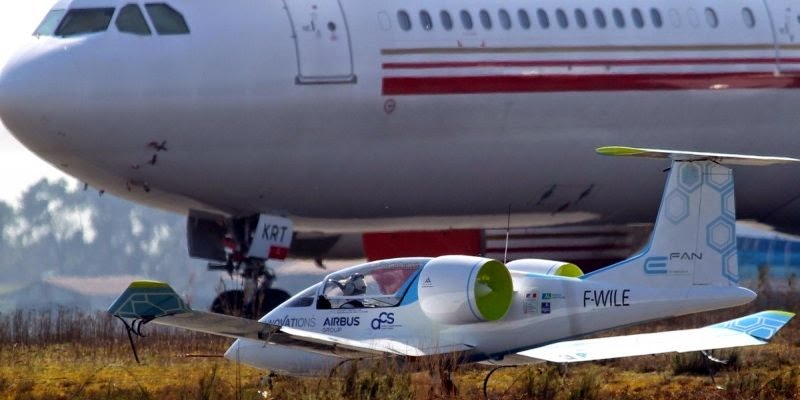
The Airbus E-Fan, an all-electric trainer aircraft made of composite material, made its first flight last month–proving once again that it is possible to fly without jet fuel.

That’s with one caveat however: The plane can fly for about an hour on a single charge. But still, this seems like a big deal mainly because the largest aerospace and defense company in Europe and the world’s leading commercial aircraft manufacturer is backing it.

The successful first public flight of the electric E-Fan experimental aircraft was the highlight of Airbus Group’s E-Aircraft Day in Bordeaux, France on April 25. The electric E-Fan training aircraft is an experimental demonstrator based on an all-composite construction. Airbus Group and its partners intend to perform research and development to construct a series version of the E-Fan and propose an industrial plan for a production facility close to Bordeaux Airport. In addition, the group’s research efforts support the environmental protection goals of the European Commission, as outlined in its Flightpath 2050 program.

Built with an all-composite construction, the E-Fan is 22 feet long and has a wingspan of 31 feet. It looks like a toy version of a jet aircraft with a pair of nacelles that aren’t really jets, but two ducted, variable pitch fans spun by two electric motors with a combined power of 60 kW. The ducting increases the thrust while reducing noise, and by centrally mounting them, the fans provide better control. The E-Fan flies at only 114 miles per hour.

Powering the fans are a series of 250-volt, lithium-ion polymer batteries made by Kokam of South Korea. These batteries are mounted in the inboard section of the wings and carry enough charge for up to one hour of flight. They can be recharged in one hour. Worried about the “recharge” light coming on while up in the air? There’s a backup battery for emergency landings.

Another key technology on the E-Fan is its e-FADEC energy management system, which automatically handles the electrical systems. According to Airbus, this simplifies system controls and, since E-Fan is a trainer, eases the workload of instructors and students.

The E-Fan has zero carbon dioxide emissions in flight and should bring a significant reduction in noise around airfields, according to Airbus, “thus improving relations between local residents and flight schools with long-term prospects for the discreet and economical initial training of future professional pilots.”

“It will not only lead to a further reduction in aircraft emissions and noise to support our environmental goals but will also lead to more economic and efficient aircraft technology in the long run. Our focus is to develop innovations that will help define what tomorrow’s aerospace industry will look like,” said Airbus Group Chief Technical Officer Jean Botti.

So today the E-Fan is a learning platform, tomorrow a larger hybrid version that can fly 80 passengers on short regional trips. That’s apparently the plan. From small beginnings, a revolution in the air.

Electric car tax credit should be $10,000 says Congressman

Vermont Rep. Peter Welch wants to make it easier to buy electric cars by increasing the size of the federal tax credit for the vehicles and making those credits available at car dealerships.

The Democrat said increasing the size of the tax credit to $10,000 and making it easier to take advantage of would make the vehicles more affordable for middle-income people.

Electric car buyers are now eligible for credits up to $7,500 through their tax return.

"If we're going to make real progress on climate change and we're going to reduce the cost of transportation, by the way, the cost of gas to our consumers, then we want to make this technology available," Welch said at an electric vehicle charging station near the Statehouse.

Welch said he planned to introduce the legislation for the Electric Vehicle Act when he returns to Washington.

More electric vehicles are needed because the transportation sector is the biggest contributor to greenhouse gases in Vermont, he said. Electric vehicles have become more practical because battery technology is improving, making it possible for people to drive longer distances without charging, Welch said.

Welch was joined at the Montpelier news conference by Montpelier Mayor John Hollar, Karen Glitman, the director of the Transportation Efficiency Program at the Vermont Energy Investment Corporation, and Dan Keene, owner of Lamoille Valley Ford and Twin State Ford.

Glitman said the number of electric vehicles sold in Vermont last year tripled and there are about 640 plug-in electric vehicles registered in Vermont. The number is still small, but it is increasing and the potential savings to Vermont consumers is huge, she said.

In 2010, there were $1.1 billion in taxable gasoline and diesel fuel sales in Vermont. If that amount of travel were provided by electric vehicles charged at the current cost of residential electricity, it would save about $800 million a year.

"We need to keep that money with Vermonters and keep it working in Vermont rather than sending it overseas for the most part," Glitman said.

NISMO ZEOD RC’s Electrical System Explained [VIDEO]

Jason from Engineering Explained has a look at the ZEOD RC's Electrical Systems and Zero Emissions on Demand motors that are capable of making the car go at 300km per hour!

While the video does show a close-up of the enclosure for the 400 volt 12 kWh battery, the only other details provided are that the twin BLDC motors are rated at 120 kw each.

GM to Build Chevy Spark EV 19 kWh Batteries In House

General Motors will bring all its electric vehicle battery building capabilities in-house with production of battery systems for the 2015 Chevrolet Spark EV at its battery assembly plant in Brownstown, Mich.

"Using our in-house engineering and manufacturing expertise enabled us to deliver a battery system that is more efficient and lighter than the 2014 Spark EV without sacrificing range," said Larry Nitz, executive director of GM global transmission and electrification engineering. "Our successful working relationship with LG Chem has allowed us to deliver a new battery system for the Spark EV that helps us to better leverage our economies of scale."

A newly designed battery system features an overall storage capacity of 19 kWh and uses 192 lithium ion cells. The cells are produced at LG Chem's plant in Holland, Mich. The battery system weight of 474 lbs. is 86 pounds lighter than the system in the 2014 Spark EV. The Spark EV battery is built on a dedicated production line at Brownstown, which also manufactures complete battery packs for the Chevrolet Volt, Opel Ampera and Cadillac ELR.

Changes in battery design will not affect the Spark's MPGe, or gasoline equivalent, performance compared to the 2014 model. Range will remain at an EPA-rated 82 miles and MPGe will remain at 119.

Priced at $19,995 with full federal incentives, The Spark EV is one of the most efficient – and affordable – all-electric vehicles available. Currently on sale in California and Oregon, the 2015 Spark EV features segment-leading technology including Siri Eyes Free, 4G LTE and DC Fast Charging.

Brownstown Battery Assembly's 479,000-square-foot, landfill-free facility south of Detroit produces the lithium-ion battery packs for GM's extended-range electric vehicles. It started mass production in October 2010 and is the first high-volume manufacturing site in the U.S. operated by a major automaker for automotive lithium-ion battery production. The site was made possible with the help of American Recovery and Reinvestment Act funding through the U.S. Department of Energy.

Dual Carbon Battery Charges 20x Faster than Current Li-Ion Batts [VIDEO]

Power Japan Plus has launched a new battery technology – the Ryden dual carbon battery. This unique battery offers energy density comparable to a lithium ion battery, but over a much longer functional lifetime with drastically improved safety and cradle-to-cradle sustainability. The Ryden battery makes use of a completely unique chemistry, with both the anode and the cathode made of carbon.

“Power Japan Plus is a materials engineer for a new class of carbon material that balances economics, performance and sustainability in a world of constrained resources,” said Dou Kani, CEO of Power Japan Plus. “The Ryden dual carbon battery is the energy storage breakthrough needed to bring green technology like electric vehicles to mass market.”

The Ryden battery balances a breadth of consumer demands previously unattainable by single battery chemistry, including performance, cost, reliability, safety and sustainability.

  • High Performance – energy dense and charges 20 times faster than lithium ion batteries. It is also more powerful than other advanced batteries, operating above four volts.
  • Cost Competitive – slots directly into existing manufacturing processes, requiring no change to existing manufacturing lines. Even more, the battery allows for consolidation of the supply chain, with only one active material — carbon. Additionally, manufacturing of the Ryden battery is under no threat of supply disruption or price spikes from rare metals, rare earth or heavy metals.
  • Reliable – first ever high performance battery that meets consumer lifecycle demand, rated for more than 3,000 charge/discharge cycles.
  • Safe – safest high performance battery chemistry ever developed. The Ryden battery eliminates the unstable active material used in other high performance batteries, greatly reducing fire and explosion hazard. Even more, the battery experiences minimal thermal change during operation, eliminating the threat of a thermal runaway. Finally, the Ryden battery can be 100 percent charged and discharged with no damage to the battery.
  • Sustainable – contains no rare metals, rare earth metals or heavy metals, and is 100 percent recyclable, vastly improving the cradle-to-cradle sustainability of an advanced battery. Even further, Power Japan Plus is testing the Ryden battery with its organic Carbon Complex material, working towards the goal of producing the battery with all organic carbon in the future.
  • “Current advanced batteries have made great improvement on performance, but have done so by compromising on cost, reliability and safety,” said Dr. Kaname Takeya, CTO of Power Japan Plus. “The Ryden dual carbon battery balances this equation, excelling in each category.”

    Path to Market

    Power Japan Plus will begin benchmark production of 18650 Ryden cells later this year at the company’s production facility in Okinawa, Japan. This facility will allow the company to meet demand for specialty energy storage markets such as medical devices and satellites. For larger demand industries, such as electric vehicles, Power Japan Plus will operate under a licensing business model, providing technology and expertise to existing battery manufacturers to produce the Ryden battery.

    Tesla Sees Need for Hundreds of Battery ‘Gigafactories’

    Tesla Motors founder Elon Musk said the need for lower-cost batteries for autos and power storage means there will need to be hundreds of “gigafactories” like the one the carmaker is planning to build.

    The electric-car company based in Palo Alto, California, anticipates the battery factory will reduce the cost of lithium-ion cells by more than its initial guidance of 30 percent, Musk said. He spoke yesterday at the World Energy Innovation Forum, an annual conference hosted by Tesla board member Ira Ehrenpreis.

    “I think we can probably do better than 30 percent,” Musk, 42, said yesterday at the company’s Fremont, California, plant. As carmakers increase demand for batteries “there’s going to need to be lots of gigafactories. Just to supply auto demand you need 200 gigafactories,” he said.

    Tesla is getting close to deciding where it will build the first such proposed facility, which Musk has said will cost as much as $5 billion and involve partner companies such as Panasonic. Last week he said groundbreaking at one of at least two potential sites could happen as early as June.

    Along with supplying cheaper batteries for Tesla’s electric cars, the plant is to supply stationary power storage devices to SolarCity Corp., another Musk-affiliated company. Those power storage devices will also be needed by other solar power providers and to store wind power, he said, without identifying specific companies.

    BMW i5 with 300 km range expected by 2017

    Following news late last year of a large battery powered BMW sedan 'already in the works', details are starting to emerge about the 2017 i5.

    According to Car & Driver, the model will be heavily influenced by the i3 but feature distinctive styling and front-hinged rear doors. The model could also be equipped with a more conservative interior but nothing is official as of yet.

    Like the i3, the i5 is expected to feature an electric motor that develops 170 PS (125 kW) and 250 Nm (184 lb-ft) of torque. However, the model's increased size could enable it to use a larger lithium-ion battery that delivers an electric-only range of up to 200 miles (322 km). There could also be a range-extended variant that uses a 1.5-liter three-cylinder petrol engine.

    The BMW i5 will reportedly be launched in 2016, as a 2017 model, and cost approximately $50,000.

    Source: Car & Driver

    BMW SGL to triple carbon-fiber production capacities

    Due to the high demand for carbon fiber in automotive production, BMW and SGL Automotive Carbon Fibers is going to triple the capacity of the carbon fiber plant in Moses Lake, WA (USA).

    The expansion will be funded by an investment of 200 million US dollars, in addition to the previously invested 100 million US dollars. The site expansion, scheduled to be completed by early 2015, will make the plant in Moses Lake the world’s largest carbon fiber plant. With the anticipated creation of 120 new jobs, the headcount at the joint venture in Moses Lake is going to rise from currently 80 to about 200 people. Due to the automated production processes, the expansion of the site in Moses Lake will make it possible for the BMW Group to apply carbon fiber material also in other model series in the future, at competitive costs and in large quantities.

    At present, the Moses Lake plant operates two production lines, exclusively for BMW i, with an annual output of approx. 3,000 tons of carbon fiber. Already this summer, SGL Automotive Carbon Fibers will commission a third and fourth production line in Moses Lake, which are currently being built, thus doubling the plant’s capacity to 6,000 tons per year. Today’s groundbreaking ceremony for a fifth and sixth production line has been the first step toward tripling capacities to 9,000 tons annually in the medium term. The energy needed for the carbon fiber production is fully generated from hydropower.

    “With its highly automated carbon fiber production and stringent quality standards, Moses Lake is setting new standards in the industry. At present, the site is the world’s fastest growing carbon fiber producer. Together with the BMW Group, we are doing pioneering work to establish CFRP as a material in large-series automotive production. In a mix of materials, CFRP offers new opportunities in lightweight construction for an eco-friendly mobility,” explained Dr. Jürgen Köhler, CEO of SGL Group.

    Dr. Klaus Draeger, Board Member Purchasing and Supplier Network at BMW AG: “CFRP is a key material for the automotive industry of the 21st century. In our endeavor to identify increasingly lightweight materials in order to reduce a vehicle’s weight and thus its fuel consumption and carbon emissions, this material plays a crucial role. As part of an intelligent mix of materials, we will apply carbon also beyond our BMW i and BMW M models in the future. Thanks to the pooling of the SGL Group’s expertise and our knowledge in large-series production of CFRP components, we will be able to produce the ultra-lightweight high-tech material also for other model series, at competitive costs and in large quantities.”

    The carbon fiber plant in Moses Lake is a key element in the strategy pursued by the two companies, which anticipates the industrialized large-series production of carbon fiber reinforced plastics (CFRP) for the application in future vehicle concepts. Up to now, carbon fiber produced in Moses Lake is exclusively used for the BMW i models. Since the start of the year, the Leipzig plant has built over 5,000 BMW i3 vehicles. At present, the production output stands at 100 units a day. Furthermore, the BMW Group has been applying the ultra-lightweight high-tech material also in its BMW M models for the past ten years.

    Andreas Wüllner, CEO of SGL Automotive Carbon Fibers: “In the course of only four years, SGL Automotive Carbon Fibers has managed to become the world’s largest carbon fiber production site. The automotive industry will increasingly turn to CFRP because it is a material of the future.”

    Availability of renewable energy crucial in the decision for the location in Moses Lake
    As part of their joint venture agreement, the BMW Group and the SGL Group invested an initial 100 million dollars at their Moses Lake site by 2013, creating 80 new jobs. Jay Inslee, Governor of Washington State: “Congratulations to the BMW Group and the SGL Group on the groundbreaking of their fifth and sixth production line at the Moses Lake Plant. Washington State is proud to partner with BMW. The game-changing technology of carbon fiber is driving a surge in U.S. manufacturing, and with this production plant Washington State is at the forefront of that surge.”

    The production of carbon fiber requires a great amount of energy. Accordingly, decisive factors for the set up of the carbon fiber plant in Moses Lake included the availability of renewable hydropower as well as competitive energy costs in Washington State. The availability of skilled workers also had an influence on the decision in favor of the location, which was taken in April 2010. The groundbreaking ceremony for the plant was in July 2010, the opening of the production site in September 2011. Dr. Jörg Pohlman, CEO of SGL Automotive Carbon Fibers: “We received great support from the regional authorities in Grant County and Moses Lake, a decisive element in making this rapid development of the past few years possible. With the site expansion, we are reaching an important milestone in safeguarding the site’s future.”

    Production of carbon fiber composites
    The production of carbon fiber composites for automotive manufacturing requires several process steps: The necessary precursor, which is based on polyacrylnitrile fiber, is made by a joint venture between SGL Group and the Japanese company Mitsubishi Rayon in Otake, Japan. In a next step, polyacrylnitrile fiber is turned into the actual carbon fiber in Moses Lake. This material is then processed at the second joint venture site in Wackersdorf, Germany, and turned into textile carbon fiber layers, the starting point for the production of CFRP body parts at the BMW plants in Landshut and Leipzig. In the BMW i models, CFRP already holds a significant share in the mix of materials, a first at this scope and in series production. The joint venture gives the BMW Group access to this innovative key material in the long term. The SGL Group provides their expertise in high-performance materials and their experience with carbon fiber-based materials.

    Test driving the new Mercedes B-Class electric Drive [VIDEO]

    For the first time, Mercedes brings a fully electric car to the U.S

    The B-Class ED is the product of a technology-sharing alliance between Tesla and Daimler that goes back to Mercedes’ 2009 investment.

    Rather than rely on in-house R&D, Mercedes essentially contracted with Tesla—the Silicon Valley car maker and acknowledged leader in electric automobiles—to provide the EV architecture (motor, transmission, battery, power electronics) for its electron-fired B-Class.

    Tesla will make the B-Class battery pack, power management system etc at the factory in Fremont, Calif., and ship them to Germany for final vehicle assembly.

    The B-Class Electric Drive, which is built on the same production line as the gasoline-powered version, is going to go on sale in Europe around the end of the year and will also come in a right-hand drive version for other markets in 2015.

    One of these days, one of these compliance cars is going to break out, sales-wise. The B-Class ED, which will sell in all 50 states, could be the one. While it might have emerged out of a compliance effort, the B-ED just shines, a premium family electric that braids Tesla’s and Mercedes’ DNA so convincingly the car might as well be called the Model B.

    Monster Tajima preparations for Pikes Peak 2014 [VIDEO]

    Nobuhiro Tajima and his APEV Monster Sport team are preparing for their third year at the Pikes Peak International Hillclimb with Battery power.

    Nine-time Unlimited division champion Nobuhiro “Monster” Tajima will be gunning for outright course record again after he was the first to break the 10 minute barrier with an electric vehicle at Pikes Peak in 2013, even surpassing the 9:51.278 he turned in during the 2011 race in a 900 hp Suzuki SX4, when he was the first driver ever to crack the Peak’s elusive ten-minute barrier.

    The outright hill record goal posts have been moved significantly this year by nine time World Rally Champion Sébastien Loeb setting a time of 8:13.878 in a 900 hp 900 kg Peugeot 208 T16 Pikes Peak Special.

    When asked after the 2013 event about beating the new gasoline record, Tajima responded: “We are able to do that very soon, it depends on the battery. With a high quality and high density battery, I can beat that record for sure.”

    MotorTorque BMW i3 review [VIDEO]

    MotorTorque has tested the BMW i3, the premium brand's first foray into electric vehicles.

    This model, the pricier range extender version, promises a range of 180 miles - eighty miles more than the pure electric version.

    Adding to its green credentials is how this car has been built. It's an entirely new frame platform made from carbon fibre reinforced plastic, which helps keep weight down and also makes it strong, meaning you don't need the B-pillar.

    There's lots of neat touches here like satnav which shows you charging points in a hundred mile radius, and there's the option to switch to petrol mode and conserve the electric range.

    You'll only find two seats in the back and the boot is okay at 300 litres but doesn't offer the same practicality as a conventional family hatchback.