Korean researchers develop ten times faster super capacitor battery

Korean researchers have developed super capacitor battery with twice as large capacity and ten times faster charge speed than conventional batteries controlling two dimensional nanomaterial structure and composition. The technology is widely expected to facilitate the development of ultra super capacitor material utilized in next generation energy industry such as electric vehicles and smart grids.

The electric double layer capacitors (EDLC) boasts high power output, faster recharge and discharge, and semi-permanent battery life. However, low energy density can restrict the application. EDLC is a type of super capacitor that stores or discharges energy within seconds by absorbing ion electrically pulled from the electrode surface.

A series of research has been conducted in advanced countries including the US to enhance the energy density by developing super capacitor electrode material. The research team found secondary nanosheet by chemically exfoliating the bulk layered compound made of transitional metal and sulfur as they would to retrieve graphene shedding off a layer of graphite before they build the two dimensional nanosheet into a three dimensional structure.

The result was published in a science magazine ‘Nano Letters’ on March 3, titled as ‘Unveiling Surface Redox Charge Storage of Interacting Two-Dimensional Heteronanosheets in Hierarchical Architectures.’

BMW doubles i8 production to meet demand

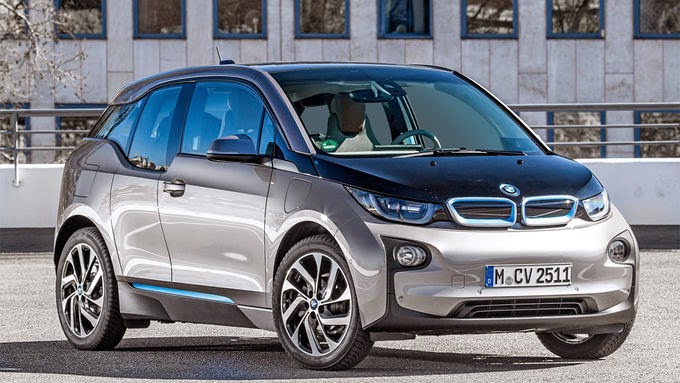
Although BMW has doubled the production capacity for the plug-in hybrid i8, the order backlog is, according to Production Director Harald Krüger still at 4.5 months.

"We are really proud to see how this demands develops for a completely new car," Kruger said at the BMW Financial News Conference. Pride partly because of the spectacular E-athletes have been accepted even better than expected in the market, and secondly because the production team at the Leipzig plant has got a handle on the production processes of the vehicle with a high carbon content faster than expected.

Since launch in summer 2014 a total of 1,741 i8 were delivered. Given the high demand BMW have doubled the production number. Currently 20 cars per day will be built. Nevertheless, demand is still rising.

Overall, BMW sold 17,793 i models last year including 16,052 i3. Norbert Reithofer acknowledged that BMW are satisfied with the development because of the valuable experience developed through the i-series with Reithofer emphasizing the goal of electrification power trains through all series.

Laguna Seca Shoot-Out: McLaren P1 vs. 2015 Porsche 918 Spyder [VIDEO]

Two 900 hp plug-in hybrids, the McLaren P1 versus the Porsche 918 Spyder.

Both of these cars have carbon fiber tubs and body panels. Both have small displacement, high revving V-8s packed between their passenger compartments and rear axles. Both use twin-clutch transmissions, carbon ceramic brakes, and active aerodynamics. Both have roughly 900 hp.

With the help of pro racing driver Randy Pobst, Motor Trend find out which one is fastest around Mazda Raceway Laguna Seca!

Tesla sells record 10,030 cars in Q1, up 55% year over year

Tesla Motors delivered a record 10,030 cars in the first quarter of 2015, a 55% increase compared with the number of deliveries in the first quarter of last year.

The company said going forward it will publish the number of new car deliveries within three days of quarter end as inaccurate sources of information have sometimes been used by others in publishing the number of vehicle deliveries.

The company expects to deliver about 55,000 cars globally in 2015, an increase of about 74 percent.

Tesla Motors is also set to offer upgrades including hands-free steering on its Model S sedan in three months, about a year ahead of other automakers.

Up to Thursday's close of $191, the stock had fallen 14.1 percent this year.

Torque Vector Steering Improves Electric Vehicle Energy Efficiency

Germany's Karlsruhe Institute for Technology along with industry partner Schaeffler are researching improvements in electric vehicle energy efficiency by using brake steer or torque vector control of wheel motors to assist power steering.

The project "Intelligent Assisted Steering System with Optimum Energy Efficiency for Electric Vehicles (e²-Lenk)" subsidized by the Federal Ministry for Education and Research (BMBF) focuses on a new assisted steering concept. In conventional vehicles, the internal combustion engine not only accelerates the car but also supplies on-board assist systems with energy; such as the assisted steering system, which reduces the strain on the driver at the wheel.

In electric vehicles, this energy comes from the battery and also reduces the range as a result. In this research project by the collaborating partners, Karlsruhe Institute for Technology (KIT) and Schaeffler, the steering system is assisted in an energy-efficient manner by intelligent control of the drive torques transmitted to the individual wheels. The project is being sponsored by BMBF with a sum of around 0.6 million euros over 3 years and was started in January 2015.

"The new assisted steering system would require less system components in an electric vehicle, this would mean savings in terms of weight and energy in an electric vehicle", explain project managers Dr. Marcel Mayer, Schaeffler, and Dr. Michael Frey, KIT. "This would mean that an electric car would be cheaper and have a greater range." Materials and production steps can be saved due to the potential optimization of the design and weight.

The basic idea of the e²-Lenk project is simple: The wheels in an electric car will be driven individually by electric motors in contrast to a car with an internal combustion engine where all the wheels are provided with equal force. If the wheels on the left side transmit more drive torque to the road than those on the right side, this will result in acceleration of the vehicle to the right without the need to turn the front wheels or consume additional energy for steering.

Tracked vehicles or quadrocopters steer using the same principle. "Steering assistance can be provided while driving by means of an intelligent control system and suitable wheel suspension", says Schaeffler engineer Mayer, Manager of the Automatic Driving Working Group, which is carrying out research as part of the collaborative research project SHARE (Schaeffler Hub for Automotive Research in E-Mobility) at KIT. "Only steering when stationary remains a challenge with conventional designs."

"The assisted steering system is part of the drive train with our approach", explains Frey who is researching at KIT's Institute of Vehicle Systems Technology. Steering the front wheels is carried out without using additional energy. "We also want to significantly increase the quality of driving. Customer benefit, comfort, safety and reliability go hand in hand here."

As part of the project, functional demonstrators are being built, with which the concepts can be validated and optimized in experiments. It is also planned to implement the system in last year's Formula Student racing car KIT built by the university group KA-RaceIng with the participation of the students.

e²-Lenk is the first publicly subsidized joint project as part of the collaborative re-search project SHARE at KIT between Schaeffler Technologies AG & Co. KG and KIT. This joint project is being managed at KIT's East Campus in a joint project management office run by SHARE at KIT and the Institute of Vehicle Systems Technology (FAST).

Schaeffler and KIT are partners in the Leading Edge Cluster Electric Mobility South-West (ESW), which connects over 80 stakeholders from science and economics in the region Karlsruhe – Mannheim – Stuttgart – Ulm. The cluster strategy of the ESW cluster aims to achieve intensive regional collaboration in the field of electric mobility by means of new approaches and forms of cooperation. As a result, knowledge is developed, consolidated and ultimately advantages are achieved in international competition.

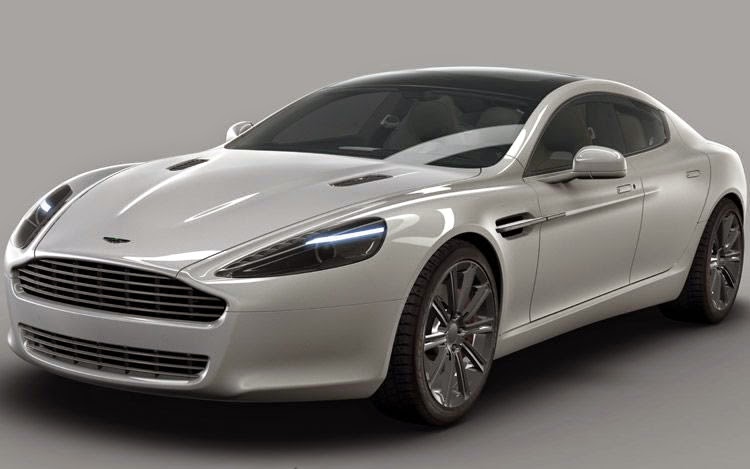
Aston Martin To Build Electric Rapide by 2018

Aston Martin Chief Executive Andy Palmer says the company may build an electric version of its Rapide sports car in two to three years as a part of its plan to overhaul its lineup and add several new models.

Mr. Palmer said the company has launched a research project for the electric car and is speaking with electric-vehicle technology companies to partner with, though he declined to say which companies.

“We are looking at technologies around the world, including some pretty cool technologies coming from Silicon Valley,” he said. Tesla Motors Inc., based in Palo Alto, Calif., isn’t one of them, he said.

Mr. Palmer, who came to Aston Martin from Nissan Motor Co., where he was an executive vice president, said the company would be producing ultraluxury special editions of its current models in the short-term to generate buzz and revenue, ahead of the new models. Aston is planning a crossover vehicle as well as an executive large sedan to compete with Rolls-Royce.

Aston Martin recently revealed an all electric DBX Concept at the 2015 Geneva Motor Show.

Source: WSJ

Chris Harris – McLaren P1 Hybrid [VIDEO]

Chris Harris takes the McLaren P1 hybrid hypercar for a drive around the UK in typical wet British weather.

The car is obviously a gorgeous piece of automotive engineering but watching this video you could be forgiven for forgetting the P1 is a hybrid. Unfortunately no mention is made of the electric powertrain until the last minute of the film when Harris hits E-mode for a short demo.

Better late than never, as the saying goes!

LG Chem to supply batteries for Daimler’s Smart EVs

Daimler has picked South Korea's LG Chem to be the sole battery supplier for the automaker's new range of Smart electric vehicles, which will be launched in 2016.

LG Chem did not disclose the value or volume of the deal, but said EVs account for a small portion of about 100,000 Smart mini cars sold a year currently.

LG Chem, which is also an EV battery supplier for General Motors and Renault, said it will provide Smart EV battery cells, which will be made into packs by Daimler's wholly owned subsidiary Deutsche ACCUmotive.

Daimler is LG Chem's 13th automaker client for EV battery packs.

Electric vehicles account for over 20% of Norway’s new-car sales

Plug-in electric car sales in Norway continue at just above 20% (21.03%) with 2,235 registrations in February 2015. Battery only electric vehicles now account for 18% of national car sales.

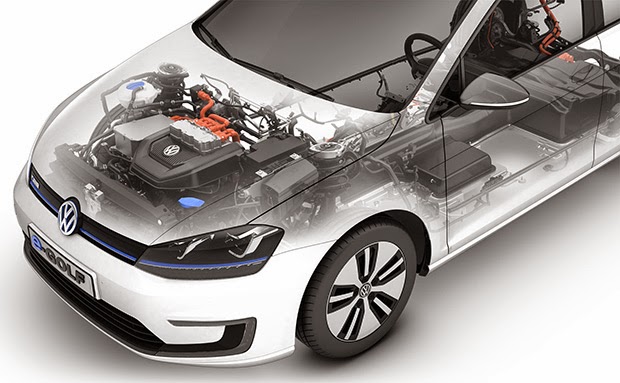
The over-all #1 selling car in Norway for the second month running is the VW e-Golf with 839 units. Sales of the Volkswagen e-Golf in Feb were almost double the top selling fossil fuelled car, the Toyota RAV4 with 450 sales.

The e-Golf accounts for almost 40% of all EV sales in Norway YTD (1,718) selling 3x more than second place Nissan Leaf (556) and 4x more cars sold than the third placed Tesla Model S (392).

The e-Golf and GTE Plug-in variants now account for 70% of all Volkswagen sales in Norway.


PlNorwayFeb.YTD '15%'14Pl
1Volkswagen e-Golf8391.718395
2Nissan Leaf247556121
3Tesla Model S32139292
4Mitsu Outlander PHEV e)15038496
5Volkswagen e-Up! e)16033173
6BMW i312622754
7Audi A3 e-Tron134188421
8Kia Soul EV4513737
9Renault Zoe5413338
10
11
Mitsubishi I-Miev
Peugeot iOn
32
54
130
114
3
3
9
11
12Volvo V60 Plug-In2757114
13
14
15
16
17
Nissan e-NV200 / Evalia e)
Mercedes B-Class ED e)
BMW i8
Toyota Prius Plug-In
Opel Ampera 
20
20
4
2
53
22
10
5
2
1
0
0
0
0
15
N/A
20
17
21

TOTAL2.2354.459100


Source: EV Sales Bestsellingcarblog

Automakers race to double the driving range of affordable electric cars

Global automakers are readying a new generation of mass-market electric cars with more than double the driving range of today’s Nissan Leaf, betting that technical breakthroughs by big battery suppliers such as LG Chem Ltd will jump-start demand and pull them abreast of Tesla Motors Inc.

At least four major automakers — General Motors, Ford, Nissan and Volkswagen — plan to race Tesla to be first to field affordable electric vehicles that will travel up to 320 km (200 miles) between charges.

That is more than twice as far as current lower-priced models such as the Nissan Leaf, which starts at $29,010. The new generation of electric cars is expected to be on the market within two to three years.

To get a Tesla Model S that delivers 265 miles (427 km) on a charge requires buying a version that starts at $81,000 before tax incentives. Most electric cars offered at more affordable prices can travel only about 75 to 85 miles (121 to 137 km) on a charge – less in cold weather or when drivers have the air conditioning on.

Automakers need to pump up electric vehicle demand significantly by 2018. This is when California and eight other states will begin to require the companies to meet much higher sales targets for so-called zero emission vehicles — in other words, electric cars — and federal rules on reducing fuel consumption and greenhouse gases become much stricter.

BATTERY BREAKTHROUGHS

Tesla Chief Executive Officer Elon Musk said last week that “200 miles is the minimum threshold” to alleviate consumer concerns over EV range. There is “a sweet spot around 250-350 miles that’s really ideal,” he said.

Musk has promised a more affordable Tesla, the Model 3, which will sell for around $35,000 and provide a driving range of 200 miles or more. That car is slated to begin production in mid-to-late 2017.

However, GM says it plans to field a 200-mile electric car, the Chevrolet Bolt, by late 2016.

The Bolt will use an advanced lithium-ion battery pack developed by Korea’s LG Chem, which also supplies batteries for the Chevrolet Volt hybrid. The newer batteries are said to have much higher energy density and provide much longer range between charges, thanks to breakthroughs in battery materials, design and chemistry, according to a source familiar with LG Chem’s technology.

"Several factors are at play that are landing at this 200-mile range" for a vehicle priced between $30,000 and $35,000, LG Chem Chief Executive Prabhakar Patil said in an interview. "We’ve been talking to several OEMs (automakers) regarding where our battery technology is and where it’s going."

LG Chem also supplies standard lithium-ion batteries to the Ford Focus Electric and may supply the longer-range batteries to a new compact EV that Ford is tentatively planning to introduce in late 2018 or early 2019, according to three suppliers familiar with the program.

Compared with the 2015 Focus Electric, which has a range between charges of 76 miles, the new compact electric model would have a range of at least 200 miles, the suppliers said.

Nissan and VW both have battery supply deals with LG Chem, and both are working on longer-range EVs for 2018 and beyond.

Nissan is planning to introduce a successor to the Leaf in early 2018, according to a source familiar with the program, and that model is expected to offer significantly greater range than the current Leaf, the best-selling electric car in the United States, which can go 84 miles (135 km) between charges.

The 2015 Leaf uses batteries made by a joint venture between Nissan and supplier NEC. It is not clear if the future model will shift to LG Chem, although Nissan CEO Carlos Ghosn has identified LG Chem as a potential battery supplier.

VW plans to expand its current range of electrified vehicles, including a successor to the battery-powered e-Golf in 2018 with much longer range, according to two sources familiar with the program. The current e-Golf uses batteries made by Panasonic and has a range between charges of 83 miles.

Volkswagen plans to decide in the first half of this year whether new battery technology under development at U.S. startup QuantumScape Corp, which may expand an electric vehicle’s driving distance between recharges to as much as 700 kilometers (430 miles), is ready for use in its electric cars.

Foxconn Partners with Tencent in Electric Car Business

Taiwan's Hon Hai Precision Industry Co Ltd, better known as Foxconn, on Monday said it has partnered Chinese social networker Tencent Holdings Ltd to develop opportunities related to electric vehicles, marking the latest tech foray into "smart" cars.

Foxconn, WeChat operator Tencent and luxury car dealer China Harmony Auto Holding Ltd signed an agreement to work together in the Chinese city of Zhengzhou, Henan province, the contract manufacturer said without detailing specifics.

The partnership would put Tencent on a par with online peers Alibaba Group Holding Ltd and Baidu Inc, which have already moved into the nascent market for Internet-connected cars vie tie-ups with major auto makers.

Foxconn said the coalition would form a working team drawing on its manufacturing capabilities, Tencent's Internet platform and China Harmony Auto's dealership network, to explore commercial possibilities in smart electric vehicles.

Foxconn announced an investment of over $800M to build electric cars in China in 2014.

Foxconn, known more for assembling the bulk of Apple Inc's iPhones, already has experience with electric vehicles having manufactured the touch screens in some cars made by U.S. automaker Tesla Motors Inc.

The absence of a carmaker from its new partnership appears to put the group on a different tack to that of Alibaba or Baidu in targeting electric vehicles.

The Chinese government has recently redoubled efforts to promote electric vehicles, renewing tax breaks and setting aggressive emission standards.

Foxconn has manufacturing operations across China and has been working to diversify from the competitive, low-margin contract business. As part of that drive, it bought around 10 percent of Zhengzhou-based China Harmony Auto last year.

Nissan LEAF Battery Reliability Outperforms Cynics [VIDEO]

Robert Llewellyn, from Red Dwarf & Fully Charged fame, debunks motoring journalists who when the Nissan Leaf was launched questioned it's battery reliability.

Of the 30,000 sold across Europe just 0.01% of batteries have been replaced since 2010. That makes the Nissan Leaf more reliable than a petrol or diesel engined car, according to industry averages.

UK Highways Agency commissions study into wireless power on roads

The Highways Agency has commissioned the Transport Research Laboratory (TRL) to undertake a feasibility study into the use of dynamic wireless power transfer (WPT) on Britain’s roads.

The Highways Angency wants to understand whether WPT can be used on motorways and major A roads, so it can prepare for and “potentially encourage” greater uptake of electric vehicles (EV).

Scheduled to report in spring this year, TRL will identify two near-market dynamic WPT technologies that could be suitable in future research and trials of the technology in the UK. The feasibility study will also consider “the requirements for integration with road infrastructure and maintenance, connection to the grid and requirements for provision of power and energy”.

In addition, TRL will look into approaches by vehicle manufacturers of integration into different classes of vehicle from cars to HGVs and busses, and investigate the viability of introducing the technology.

TRL said in a statement: “The purpose of the project is not to find an alternative to current plug-in charging infrastructure but rather to develop a comprehensive charging eco-system capable of delivering power to EVs via different methods. This is to facilitate greater and more flexible use of EVs in the UK, overcome range anxiety and allow switching to zero emission for vehicle types that have traditionally been accepted as not suitable for electrification, such as HGVs and coaches.”

Once the study is completed, TRL said it could be followed by a series of off-road “test track trials and accelerated pavement facility testing”.

Audi Launch 2015 R18 E-Tron Quattro WEC

Audi Motorsport has taken the wraps off the 2015 R18 e-tron quattro scheduled to compete in the FIA World Endurance Championship (WEC).

The new version has some big shoes to fill taking into account last year's model triumphed at Le Mans, but Audi is confident they can repeat the 2014 success thanks to a more aerodynamic body. It features larger air inlets in the redesigned front wheel arches along with reshaped headlights benefiting from matrix LED and Audi Laserlight technologies. Also new are the front wing, hood and engine cover while the monocoque has been carried over.

Audi has prepared two body configurations suitable for various tracks of the 2015 WEC calendar and they have also optimized the chassis in collaboration with Michelin. The engineers were responsible for doubling the amount of energy from 2 to 4 megajoules per race lap at Le Mans and during braking the energy recovered is then sent back to the front axle during acceleration.

The electric motor has been upgraded to 272 HP (200 kW), representing a "significant increase" compared to last year's variant while the encapsulated flywheel energy storage system can now store 700 kilojoules which is 17% more than before.

The LMP1 prototype tips the scales at just 870 kg (1,918 lbs) and now consumes 2.5% percent less diesel per lap than last year in order to meet the more stringent regulations implemented by FIA. Output of the TDI 4.0-liter V6 engine stands at 558 HP (410 kW) and only five engines will be available during the 2015 WEC season.

Axial Flux Induction Motor for Hybrid and Electric Cars [VIDEO]

EV Powertrain start-up Evans Electric is rumoured to have been working on some interesting electric vehicle projects recently.

The team have developed a world-first copper rotor axial flux induction motor for automotive applications. The patent pending design has torque density on par with comparable axial air gap synchronous motors but without the expense of rare-earth permanent magnets.

Disc-shaped Axial flux motors are steadily making inroads into electric vehicle powertrains with Renault, Koenigsegg and Bugatti all looking to incorporate them into future models.

Evans Electric were also rumoured to have been hired by an OEM to help develop the architecture of a series hybrid powertrain based on in-board AFIMs with all-wheel-drive torque vectoring powered by a supercapacitor / li-ion battery energy storage system.

No news on which OEMs head these projects but they are believed to be EU headquartered.

BMW Developing Future Batteries with Samsung SDI

BMW announced that it is developing future batteries with Samsung SDI. Also, it will use a Samsung SDI battery in its PHEV model of the BMW 3 series.

During its annual press conference in Munich, Germany, on March 18, BMW Automotive Group's purchasing division head Klous Draeger said, “We are in a very good relationship with Samsung. Last year, we signed an MOU for long-term cooperation with Samsung. Currently, we are developing future batteries together.”

He continued, “We are not sure if we would cooperate with other companies in the future. The only thing we are certain of is that we are in good cooperating relationship now. In five or 10 years, if we produce too many electric cars and demand exceeds supply, only then might we consider getting batteries from other companies. At the moment, we have no plan to get batteries from other firms.”

This is a very rare case that a high-ranking executive in the BMW Group mentioned particular batteries in an annual press conference. The industry believes that the BMW Group is working hard for cooperation with Samsung SDI.

Draeger said, “We will use Samsung SDI’s batteries in our plug-in hybrid electric vehicles based on its compact sedan 3 series next year.”

In July last year, Samsung SDI signed an MOU with BMW Group at BMW Driving Center on Yeongjong Island, Incheon, to supply electric car batteries worth trillions of won in the medium and long term. At that time, the two companies mentioned only the supply deal of Samsung SDI batteries for BMW's i3 and i8 models.

Samsung Group’s venture capital arm recently led a $17 million round of financing for Solid State Lithium Ion battery maker Seeo Inc. California-based Seeo currently has cells (though not in use commercially) capable of operating with an energy density of 350 Wh/Kg (watt-hour per kilogram), but it’s now targeting 400 Wh/Kg — around double that used in most electric vehicles today.

Samsung SDI is also currently supplying electric vehicle batteries to Chrysler and Mahindra of India.

VW to Decide on New 700 km Range Battery Technology by July

Volkswagen plans to decide in the first half of this year whether new battery technology under development at U.S. startup QuantumScape Corp. is ready for use in its electric cars.

The technology’s potential to boost the range of battery-powered vehicles is compelling and tests are progressing, VW Chief Executive Officer Martin Winterkorn said outside a press conference in Stuttgart, Germany, on Tuesday.

“I was there last year,” Winterkorn said. “Progress has been made,” and the company will be able to determine how to proceed by July.

VW acquired a 5 percent holding in QuantumScape and has options to raise the stake, people familiar with the matter said in December. The German carmaker is considering using the energy-storage technology, which is fireproof, for vehicles from the namesake brand as well as at the luxury Porsche and Audi divisions, the people said.

700 km range

Winterkorn said in November that he sees “great potential” in the new power-storage technology, which may expand an electric vehicle’s driving distance between recharges to as much as 700 kilometers (430 miles). That’s more than three times the range of the battery-powered version of the VW Golf. Tesla’s Model S has a range of 270 miles, according to its website.

Closely held QuantumScape, founded in 2010 by former Stanford University researchers, is working on solid-state batteries as an alternative to liquid electrolytes such as the lithium-ion technology used in many electric cars today. Solid electrolytes are burn resistant and could potentially store more energy and provide more power to extend the range of electric vehicles.

Developing the next generation of nuclear batteries

Atomic batteries that don't require recharging and last between 12 and 30 years are being developed for small scale applications that could potentially be scaled up for EV applications. There are quite a few variations on Nuclear batteries and just as many university labs working on them.

Researchers in the US are using pioneering technology to create long-lasting, more efficient nuclear batteries. Several teams at the University of Missouri are pursuing nuclear battery research . Much of this work is focused on pushing the frontiers of nuclear battery technology by employing power sources using alpha or beta-particle decay based on a radioactive isotope that can be produced, separated and refined at the University of Missouri Research Reactor.

The notion of an electric car that recharges itself is appealing but initially the most likely customers are oil and gas and aerospace industries, and space flight companies, which need reliable power sources in inaccessible locations and physical extremes such as high or low temperature and pressure. For example, a betavoltaic incorporated into a flight data locator could signal to search teams for years instead of months.

"With enough financial support to fund both our irradiation and packaging, we could have a commercial-ready device in three years."

Recently Power-technology.com talked to Patrick J Pinhero, Alan K Wertsching and Jae Wan Kwon of the University of Missouri about pushing the boundaries of betavoltaic electricity generation.

Next BMW i model not due until 2020

BMW R&D chief Klaus Froehlich says the company will launch a third BMW i car but it won’t arrive until at least 2020.

“We are still in the strategic research phase where we brainstorm,” BMW Group r&d chief Klaus Froehlich told Automotive News Europe. “Teams that start with a white sheet of paper. They talk with customers, hold workshops, then present their ideas and we decide.”

Froehlich disputed media reports that claimed the third model after the i3 and i8 would be a variant of the X5 premium large SUV. He said the mission of the i subbrand is to change the perception of how a low-emissions car should look and perform, therefore there are no plans to re-package an existing BMW Group model and call it an i model.

Also, he said the i subbrand is supposed to be a starting point for cutting-edge innovation that progressively moves down into the rest of the automaker’s lineup. Current examples include carbon fiber, which is a key part of the i3 and i8 and is moving into other BMWs, and the i8’s plug-in hybrid powertrain, which is being added to high-volume models such as X5, 3 series and 4 series.

BMW will focus on steadily improving the i3 and i8 during the six-plus years until the subbrand’s portfolio grows again.

“We have a minimum 20 percent battery density improvement every three years, thus over the i3 and i8’s life cycle, we will offer more performance, more range or a combination of the two,” Frohlich said.

When asked whether current i3 and i8 owners would be able to switch to the more powerful electrical powertrains Froehlich said: “I don’t think a retrofit makes sense. When better batteries are available, we could then offer models with a longer range or with the same range but at a lower price.”

BMW Ceo Norbert Reithofer, who approved the i project skunkworks that developed the lightweight, low-cost carbon-fiber composites and electric drivetrains for the i3 and i8, will step down in May to be be replaced by Harald Krüger, current head of production. Krüger is known to have a more pragmatic view of electric vehicles than Reithofer.

Also BMW's R&D Chief, Herbert Diess, who oversaw the launch of the i3 and i8, and was thought to be a potential successor for BMW's CEO role was recently poached by Volkswagen to become chairman of VW's passenger car brand.

Dyson invests in Solid-State battery firm Sakti3

Vacuum cleaner inventor Sir James Dyson invests $15m into company that could revolutionise battery technology.

Inventor and entrepreneur Sir James Dyson is making his first investment outside the business he founded and which made him a billionaire, giving his financial backing to a company that hopes to revolutionise battery technology.

Sir James who made his fortune inventing and developing the bagless vacuum cleaner is investing $15m into US company Sakti3 which is developing “solid-state” batteries.

The money is part of a larger $20m investment round in Sakti3 that includes a deal to commercialise the company’s research and incorporate it into Dyson products.

Sir James said: “Sakti3 has achieved leaps in performance which current battery technology simply can’t. It’s these fundamental technologies batteries, motors that allow machines to work properly.

“The Sakti3 team has amazing ambitions, and their platform offers the potential for exponential performance gains that will supercharge the Dyson machines we know today.”

Most batteries in commercial use today rely on lithium-ion technology which contains a pressurised flammable electrolyte, which is vulnerable to damage, and also means they are heavy and limits their ability to store power.

Solid-state batteries do away with the liquid electrolyte, and instead replace it with a metal one which coats the battery’s electrodes. As well as being safer and able to withstand higher temperatures, using a metal electrolyte means more exotic materials can be used which store more energy, making the solid-state batteries more powerful, smaller and lighter.

Sakti3 has produced a battery with an energy density rating of 1100 watt hours per litre using the technology, 50pc better than current lithium-ion batteries.

Sakti3 has been investigating how to improve batteries for almost a decade, since the company was spun out of the University of Michigan. Along the way it attracted $50m in equity investments, including from Khosla Ventures, Beringea, Itochu and auto giant General Motors.

Sakti3 named as one of MIT’s most innovative companies began by computer modelling the technology and is now scaling up prototype batteries into production.

Ann Marie Sastry, founder and chief executive, said: “It was an honour to be approached by Dyson because it wanted what we did much, much better batteries.

“There is a great deal of knowledge and passion on both sides, and Dyson’s engineering team has the capability and the track record to scale up new ideas and make them a commercial reality.”