Nissan LEAF Sales Rise 1,000% In January 2014

UK Nissan LEAF sales for January 2014 clocked-in at 1000% higher than the same period in 2013.

The all-electric hatchback accounted for nearly 75% of fully electric vehicle sales for the month. The Nissan LEAF has now reached 3,000 sales in the UK and 100,000 worldwide.

Since its launch in December 2010 Nissan has seen the pace of sales increase consistently and 2013 was a record year. The LEAF is now available to customers in 35 countries on four continents. In Norway, the Nissan LEAF topped sales charts, out-selling conventional gasoline powered vehicles in October 2013.

After leading the era of electrification in passenger vehicles with the LEAF, Nissan will in 2014 bring an all-electric light commercial vehicle to market. The e-NV200 will go on sale in Europe and Japan.

Electric Nissan e-NV200 van on sale in May

The new e-NV200 is based on Nissan's existing NV200 van but, it features the electric drive system from the Leaf.

Nissan will initially offer the e-NV200 in van and five-seat people carrier variants. Using the Leaf's electric motor and battery pack will grant it around 107bhp and 207lb ft, and the range has previously been claimed to be equivalent to the Leaf's - around 80 miles in real-world conditions.

The e-NV200 is targeted primarily at businesses. Official pricing is yet to be confirmed but Nissan had said the initially higher price would be offset by a "reduction in operating costs", compared to a standard diesel van. Currently, the diesel NV200 is priced upwards of £13,585.

World’s First Large-Scale Power Storage System Made From Reused EV Batteries

Japanese Firm Sumitomo Corporation has developed and installed the world’s first large-scale power storage system which utilizes used batteries collected from electric vehicles. This commercial scale storage system, built on Yume-shima Island, Osaka, will begin operating in February 2014.

Over the next three years, the system will measure the smoothing effect of energy output fluctuation from the nearby “Hikari-no-mori,” solar farm, and will aim to establish a large-scale power storage technology by safely and effectively utilizing the huge quantities of discarded used EV batteries which will become available in the future. This project has been selected as a model project for "Verification of the battery storage control to promote renewable energy" for the fiscal year 2013 by the Ministry of the Environment of Japan.

Nissan and Sumitomo Corporation created the joint venture company, “4R Energy Corporation”, in September 2010, to address the secondary use of EV lithium-ion batteries. The used EV batteries that will be recycled into this large-scale storage system have been recovered and have gone through thorough inspection and maintenance at 4R, to confirm safety and performance. This prototype system (600kW/400kWh) consists of sixteen used EV batteries.

Battery Business Development Department General Manager, Norihiko Nonaka said “We are pleased to be a part of such an important verification project that can both utilize used EV batteries, and provide a large-scale power storage facility, which are important issues that need to be addressed for the future of renewable energy.”

Sumitomo will seek new business opportunities which can make use of the highly economical storage system, as well as work on developing new applications for used EV batteries. The company aims to actively promote this approach, which can both contribute to expanding the use of EV and encourage the use of renewable energy. Sumitomo is committed to the movement toward lowering the carbon footprint of a sustainable society.

Fully Charged – The Electric Highway – London to Edinburgh [VIDEO]

This episode follows Robert Llewellyn's one day electric car journey from London to Edinburgh in a Nissan Leaf. Using the Ecotricity fast charge network they covered the 407 miles with 8 rapid charge stops in just 13 hours.

In 2011 the BBC's Brian Milligan took 4 days to drive an electric car from London to Edinburgh. In what could only be seen as an anti-EV publicity stunt, Milligan set out to make the 484-mile journey using only publicly available charging infrastructure, making eight stops and spending about 46 hours of his total trip sleeping and waiting for the Mini E to refill its battery.

On day 3 of the BBC trip, David Peilow talked Tesla Motors into loaning him a Roadster to complete the same distance in 1 day. The Roadster stopped twice enroute and handsomely beat the BBC crew but could have potentially completed the trip in one day AND on a single charge.

As the Leaf comes with a Level 3 CHAdeMO charging socket fitted as standard, a Nissan Leaf, using the Ecotricity Fast Charge network, can cover the BBC trip in 1 day so on the third anniversary of the BBC's trip Robert Llewellyn and David Peilow set out to prove it.

In fact we posted a video of a British couple doing 500 miles (800 km) in a day in a Nissan Leaf using the Ecotricity Electric Highway backed by renewable energy.

Nissan Installs Europe’s 1,000th 30-Minute Electric Car Charger

Nissan has announced 1,000 CHAdeMO quick chargers have now been installed in Europe with the commissioning of the charger at the Roadchef Clacket Lane Services in Surrey, UK. The fast charging unit can recharge the batteries of compatible* electric vehicles- including the 100% electric Nissan LEAF- from zero to 80 percent charge in just 30 minutes, and at zero cost.

The installation of the fastest type of chargers dramatically increases the uptake and usage of electric vehicles. In Norway, Europe's biggest EV market, the number of electric vehicles using the E18 highway increased eight fold in an 18 month period after a CHAdeMO quick charger was installed on the route**.

The new charger has been installed in collaboration with Ecotricity, a UK green energy specialist and pioneer in electric vehicle charging. The location south of London on the M25 motorway, one of the busiest in Europe, allows drivers west of London easy access to Kent and onwards into Europe.

Director of Electric Vehicles, Nissan Europe, Jean Pierre Diernaz commented: "This is a huge landmark for zero-emission mobility, allowing a range of EVs, including the Nissan LEAF and forthcoming Nissan e-NV200 electric van, to quickly extend their journeys. The UK charging network is expanding rapidly and through our partner Ecotricity, customers are able to "refuel" their car for free with wind and solar generated electricity."

This latest charger is part of a network of 195 chargers in the UK, which is forming electric corridors across the country, linking major towns and cities. In the UK, Nissan has been working with partners including IKEA, Moto, Roadchef, Welcome Break and Nissan dealers to create this rapidly growing network with 124 quick chargers installed in 2013. The rate of installation of CHAdeMO quick chargers across Europe rose sharply in 2013, hugely increasing access for Nissan LEAF customers. In 2010 there were just 16 quick charging points. This rose to 155 a year later and 540 in 2012. The 1,000 mark in 2013 will be dwarfed by the end of 2014 with over 1,800 quick charger points expected. Together with Nissan, investment in this Euope-wide development of infrastructure comes from a multitude of partners in the energy field, including the Swiss multinational power company ABB, French quick charger manufacturers DBT, and the Portuguese EFACEC Corporation, leaders in the electromechanics field.

2016 Nissan GT-R Hybrid Rendered

Is this (above) a preview of the 2016 Nissan GT-R Hybrid? The Nissan Sport Sedan concept (below) revealed at The North American International Auto Show was originally expected to transform into a new Maxima sedan but reports out of Detroit hint at one other potential evolution of the concept: the next-generation GT-R.

Hungarian graphics blogger X-Tomi has rendered a two door coupe version of the Detroit show car that looks feasible. EV News have reported several times that the next generation GT-R will have a hybrid powertrain with the 600 hp Infiniti Essence Hybrid revealed at the 2009 Geneva Motor Show and confirmation from Nissan engineering, sales and marketing boss Andy Palmer in 2013.

Some unanswered questions remain, will the new GT-R continue to be all-wheel-drive and will the wheel motor powered 380Z sports car Nissan is working on play any role in GT-R development?

Nissan and FedEx Express Put All-Electric e-NV200 to Work

FedEx Express, a subsidiary of FedEx Corp., and Nissan announced today at the Washington Auto Show that the two companies will begin testing the Nissan e-NV200, a 100 percent electric compact cargo vehicle, under real world conditions in Washington, D.C.

This test marks the first time the vehicle will be running in North America. FedEx Express and Nissan have conducted similar e-NV200 tests with fleets in Japan, Singapore, the United Kingdom and Brazil.

FedEx and Nissan are both committed to reducing the environmental impact of their operations worldwide. Rotating the Nissan e-NV200 into the delivery fleet is part of the FedEx EarthSmart program, a global sustainability platform designed to guide the company's environmental commitment in the communities where it operates. For Nissan, this effort aligns with its "Blue Citizenship" corporate social responsibility program with a focus on increasing the number of vehicles that emit no greenhouse gases by exploring additional vehicle segments where its leading electric vehicle technology may be applied.

FedEx will deploy the Nissan e-NV200 in the Washington, D.C. area, where it will undergo field tests that subject it to the routine requirements of a delivery vehicle. The results will be used to help determine the viability of using an electric vehicle in this role in the U.S. Nissan e-NV200 is scheduled to begin mass production later this year in Europe.

"As a global fleet operator serving 220 countries and territories worldwide, FedEx is committed to improving the efficiency of its vehicles as part of our EarthSmart initiatives," said Mitch Jackson, vice president of Environmental Affairs and Sustainability, FedEx Corporation. "We are pleased to continue our work with Nissan and bring the e-NV200 into test in North America."

"We're eager to work with FedEx and other companies to put the e-NV200 through its paces to continue to build awareness of the capability of electric vehicles and to evaluate how well it meets the needs of the commercial consumer," said Erik Gottfried, Nissan director of Electric Vehicle Sales and Marketing. "We'd also like to explore clever uses of EVs in work environments where carbon emissions of gas-powered vehicles make them impractical or impossible to use."

Nissan's Second Global All-Electric Vehicle

Following Nissan LEAF, e-NV200 will be the second EV that Nissan markets globally. The all-electric compact cargo vehicle strengthens Nissan's leadership in zero emission mobility. The 100 percent electric model offers the same versatility, functionality and roominess as its gasoline-powered sibling. The e-NV200 delivers unique, emission-free and quiet performance thanks to a powertrain based on Nissan LEAF and the same advanced lithium-ion battery. It emits no carbon dioxide, compared to approximately 140 g of CO2/km emitted by gas-powered engines in a similar vehicle. The e-NV200 can be charged up to 80 percent of its full capacity in less than 30 minutes when equipped with a quick charge port and using a fast charger.

With front-wheel drive, the e-NV200 provides rapid and smooth acceleration and excellent handling with a high degree of maneuverability. The electric vehicle delivers immediate torque, which benefits acceleration with a heavy payload from a dead stop. The e-NV200 offers the low cost of ownership that EVs such as LEAF boast—based on fewer maintenance requirements and the reduced cost of charging versus fueling. The smart positioning of the battery ensures a larger cargo area, and the vehicle maintains a low load floor, key considerations for light commercial vehicles.

FedEx: The EV Global Fleet

FedEx Express currently has 167 electric vehicles and 365 hybrid electric vehicles in the United States, France, Germany, Italy, Japan and China, including the units that will be deployed in Brazil starting in January. By the end of this fiscal year (May 31, 2014), the company plans to increase these numbers to 222 and 393, respectively. From 2005 to 2012, the introduction of this type of vehicle in the fleet enabled the company to save nearly 2.4 million liters of fuel.

Initiatives like this, aligned with others, such as matching the right vehicle to the right route, buying vehicles with the right-sized engines and inclusion of light vehicles into the fleet, have allowed FedEx to quickly progress towards its goal of increasing the fuel efficiency of its fleet, which the company revised in the beginning 2013 by increasing its initial improvement target from 20 percent to 30 percent by 2020.

Nissan sells 100,000 th Leaf Electric Car

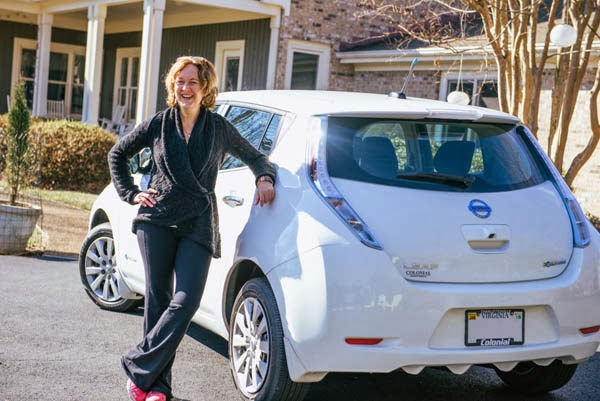
Amy Eichenberger of Charlottesville, Va., became the 99,999th global Nissan LEAF customer when she purchased her 100 percent electric vehicle at Colonial Nissan.

Amy, a 47-year-old mother of two, wasn't even in the market for a new car. Then she spotted a University of Virginia colleague's Nissan LEAF and decided she wanted to know more about the "modern-looking, futuristic and progressive" car.

"As an architect, the style first got my attention, and I loved the concept of zero emissions," Amy said. Amy is a project manager overseeing major capital investments for the University of Virginia in Charlottesville.

Nissan LEAF was the first car Amy test drove, and she loved the zip it had. A Mercedes driver for 10 years, Amy describes herself as "picky." Quality, safety, a "glide ride" and reliability were at the top of Amy's auto shopping list criteria.

She said she had a few initial reservations—primarily around range—so she tested out some gasoline and diesel competitors as well. "I'd been told once I drove a Mercedes I'd never drive anything else again. I don't need fancy, but I do appreciate the solid feel and craftsmanship of a luxury vehicle, and I get that in the LEAF," Amy said.

"The general fuel economy out there is unimpressive and many of them felt tin-canny. I didn't even want to look at anything in the 20 MPG range. I considered the VW Jetta TDI, Toyota Prius, Honda CRV and a couple of Subaru wagons, and I always came back to the Nissan LEAF. Everything else seemed stuck in the past," Amy explained.

Amy ultimately chose a LEAF S in Glacier White. Her commute is about 10 miles to the university each day and most of her errand-running is around the city—well under the LEAF's estimated range of 84 miles on a full charge.

"I have friends I like to visit in Richmond, which I can do in the LEAF with some planning, and in DC, which I'll do in my son's or boyfriend's car. LEAF will meet my needs 98 percent of the time, and I didn't want to let a little range anxiety prevent me from missing out on what I consider a much more progressive and forward-thinking vehicle than any of the alternatives."

Chris Crowley, the dedicated EV salesperson for Colonial Nissan, sold Amy her LEAF. He explained that LEAF buyers are not typical walk-ins. "LEAF buyers generally come in well educated about the vehicle, looking for even more information and wanting to see how it feels and drives. We spend a lot of time talking about driving habits to make sure it meets their needs and reviewing how very much it's like any other vehicle in its capabilities with the added benefit of no fuel bill. Folks like to be green, but you can talk to their pocket books as well," Chris said.

Chris has been with Colonial Nissan for two years and has been the lead EV person for most of that time. He's sold nine LEAFs total with three of those coming in the past three weeks. "LEAF sales have picked up because once we were selling to engineers who were fans of the car and knew exactly how it worked. Now we're selling to a much broader audience, and I think we've benefitted from a few folks who resolved to be greener in the new year."

Nissan LEAF launched in the United States in December 2010. The United States accounts for nearly half of the sales worldwide. The pace of LEAF sales has continued to accelerate. In 2013, Nissan sold 22,610 of the electric vehicles in the United States, more than twice as many as in 2012 and more than 2012 and 2011 Leaf sales combined.

Nissan LEAF traditionally has performed well on the West Coast with notable markets such as San Francisco, Los Angeles and Seattle, but now interest has expanded across the country. New hot markets have emerged such as Atlanta, which has been the No. 1 LEAF market for the past five months.

"With LEAF, we see a high level of organic growth and viral sales where LEAF owners become our best evangelists and salespeople. With electric vehicles, many folks presume a 100 percent electric vehicle won't meet their needs until they chat with a neighbor, co-worker or family friend who loves their LEAF and explain its practicality, and then it goes on their consideration list," said Erik Gottfried, Nissan's director of EV Sales and Marketing. "In fact, we're seeing similar results with the geographic dispersion of sales. With sales high in Atlanta, we now see other Georgia markets such as Macon and Columbus picking up significant momentum, similar to Eugene, Ore., following on the success of Portland."

Nissan LEAF is best-selling EV in history with 48 percent market share of the electric vehicle market globally. As of November 2013, Nissan LEAF drivers have completed an estimated 1 billion zero-emission kilometers, resulting in approximately 165 million kilograms of CO2 saved.

Nissan LEAF offers powerful acceleration, quiet operation, energy efficiency and low cost of maintenance. Nissan has extended the standard warranty for the battery-power holding capacity with its own additional warranty for customer satisfaction and assurance.

After leading the era of electrification in passenger vehicles with the LEAF, in 2014 Nissan will become the first to bring a mass-market all-electric light commercial vehicle to market. The e-NV200 will go on sale in Europe and Japan bringing the benefits of quiet, cost-efficient, zero-emissions mobility to businesses.

In June 2014, Nissan will participate in the 24 Hours of Le Mans with the NISSAN ZEOD RC and aims to set a record for the fastest all-electric, zero-emissions lap of the circuit. Nissan is committed to using the EV platform to break new ground in both the commercial-vehicle and motorsports arenas.

Nissan “seriously testing” wheel motor powered 380Z like EV sports car

We reported almost a year ago that Nissan were “really seriously testing” in-wheel electric motors for the new-generation of electric-powered cars. The automaker's global design chief Shiro Nakamura has again confirmed this during an interview with Motor Authority at the recent Detroit Auto Show.
“It's not just at the concept level...We are making serious progress with in-wheel motors; cost is becoming less of an issue, and at a certain point we would like to use in-wheel motors.”

While Nissan's BladeGlider EV concept has in-wheel motors on the rear axle, Nakamura admitted that Bladeglider has some design attributes (like its narrow front track) that might prove insurmountable for a global product—especially with respect to safety—and that any production car would likely have to be wider in front.

He suggests the ESFLOW EV concept, which from behind looks alot like the Bladegliber and at first glance could easily be mistaken for a 380Z, could be a production direction.

The ESFLOW concept presented at the 2011 Geneva Motor Show was said to have a cruising range on one charge of 240 kilometer (150 mile) and was rear-wheel drive powered by two motors that where placed above the axis of the rear wheels, in a mid-ship position.

These motors independently control the left and right wheels, and so the torque is optimized to ensure outstanding vehicle stability and control as well as efficient power regeneration. The motors produce enough torque in an instant for the ESFLOW to reach 100 kph in under 5 seconds.

Nissan lifts Leaf output as US sales rise

Nissan has lifted U.S. production of its all-electric Leaf by about 50 percent to 3,000 units a month to meet growing demand for the car.

The Leaf logged record sales of 2,500 units in December and was now the best-selling car in some dealerships in Atlanta, where the government is helping promote the technology, outpacing the Altima sedan.

The pickup in sales was driven in large part by Nissan's decision to cut its price by more than $6,000 to $29,650 at the beginning of last year after a shift in production of the model to the United States allowed it to lower manufacturing costs.

While volumes are still at relatively low levels for a production car, sales more than doubled last year to above 22,000 in the U.S. market, momentum is building.

One factor is the increase in charging stations in Atlanta and cities such as Seattle and San Francisco on the West Coast. There are currently 554 quick-charging stations, and more than 15,000 slower "level 2" public charging stations across the U.S., Nissan estimates.

The Leaf's customer base is also evolving. While at first most Leaf buyers were green enthusiasts, increasingly customers focused on the potential cost benefits of owning an electric car are showing up at its dealerships. As a result, it has recently increased prices on some versions of the Leaf. Nissan produces the Leaf at its Smyrna, Tennessee plant.

Nissan Expect U.S. Leaf Sales To Double in 2014

Nissan CEO Carlos Ghosn said he expects to double Leaf sales in the United States in 2014.

Sales of the battery-powered Leaf jumped 130 percent last year to a record 22,610, aided by 2,529 deliveries in December, the most ever in a single month for the carmaker. That figure should keep rising, Ghosn said in a CNBC interview.

"We are now on a trend of 3,000 cars a month in the U.S., which is about 36,000 cars" a year, Ghosn said. "The next step is moving up to 4,000 a month, which is going to be approximately 50,000," he said, without setting a target date.

Nissan and other automakers delivered a record number of hybrid and rechargeable cars and light trucks last year as the industry remains under U.S. pressure to boost fuel efficiency. Sales of vehicles powered partially or entirely by electricity totaled at least 578,000 units last year, up more than 100,000 units from 2012 and accounting for about 7.5 percent of all new cars sold in the U.S. last year.

Nissan Leaf to Launch in China April 2014

Recent Chinese media reports indicate that the Nissan Leaf will soon be launched in China under the Venucia sub brand name from Dongfeng-Nissan. The Leaf will be renamed for the Chinese market where it will be named the Venucia E30, or ‘Qi Chen’ in Chinese.

What is surprising is that the Leaf/e30 is exceptionally close to being produced in China, reports indicate that the model will be on sale in April 2014 in the Beijing and Shanghai areas, and will receive government subsidies of around 100,000RMB (US$16,500) owing to municipal subsidies along with central government subsidies.

Nissan LEAF reaches 3,000th UK sale

The Nissan LEAF has reached a milestone with the 3,000th sale of the model in the UK.

The landmark was reached in November and came as Nissan's second-generation LEAF secures more than 1,300 UK sales in the six months since its launch.

Jon Pollock, sales director at Nissan GB said: ‘The fact the we have been able to reach the 3,000 mark is a fantastic achievement and shows not only what a wonderful car it is but also that motorists are keen to experience the revolutionary new technology it introduces.

He added: ‘The low running costs of the LEAF, not to mention its many other benefits, make it an incredibly attractive proposition and we have been seeing steady growth in sales.

‘We expect that trend to continue rising as the model's visibility increases and the rapid charging infrastructure expands across the UK.’

With the price of unleaded petrol in the UK this year as high as 132.9p per litre (AUD$2.42/lt) equal to US$8.21 a US gallon, EV sales can surely only accelerate.

To date, more than 16,000 LEAFs have found owners across Europe, while global sales have now topped 87,000.

Nissan tests new Leaf battery chemistry

Nissan believes it can create a longer-lasting battery pack for its electric Leaf next year by altering the recipe used to create the component.

The proposed change in chemical composition, which is still under review at the automaker, should make the lithium ion battery more resilient to hot-weather aging, says Billy Hayes, vice president for Nissan's global electric vehicle business.

"We're working on an improved chemistry to improve the longevity of the batteries, especially in these prolonged extreme heat situations," Hayes told journalists during the Tokyo Motor Show last month.

"We're optimistic that we would use that for replacements going forward."

If approved, the new chemistry would go into production at Nissan's Smyrna, Tenn., Leaf and battery module assembly plant in the first half of 2014, he says.

Leaf owners in hot-weather markets such as Arizona and New Mexico have complained that their batteries appear to be aging faster than the manufacturer envisioned.

This year Nissan addressed the complaints by vowing to replace underperforming batteries.

Hayes says the new chemical composition will not extend the Leaf's driving range, which averages 73 miles on a single charge, according to Nissan marketing material. But he said it should delay the degradation of the battery over its lifetime.

EV batteries are produced in a baking process in which 48 modules of cells are sealed, injected with electrolyte and allowed to age.

Altering the chemicals involved can produce differences in performance, weight, cost and other characteristics.

Andy Palmer, Nissan's chief planning officer, says the Leaf battery has already gone through two other product enhancements since it entered production in Smyrna a year ago, to reduce weight and cost. He estimated that, after the expected change in chemical composition next year, it will likely see two more generations over the next two years.

Meanwhile, Nissan is working on other EV batteries, as well as other battery-powered models, Palmer says. In 2014, Nissan will introduce a lithium-powered NV200 compact cargo van. And Nissan is also studying plans to build an EV sports car based on the recently unveiled BladeGlider concept.

Norweigian Electric Car Sales hit 12% market share in November

Electric car sales in Norway have set yet another record. According to OGV battery electric vehicles sales increased sharply with 1434 new EVs being sold in November giving them an 11.9% market share amongst passenger car sales. This is a 357% increase on the same month last year when EVs accounted for only 2.6% of the market.

After topped the list of new car registrations in Norway in September, the top selling electric car for November is the Tesla Model S with 527 sold, accounting for 4.4% market share on it's own and second over-all of all cars sold behind the VW Golf.

After leading the market for the first time last month, the second most popular EV is the Nissan Leaf with 512 sold and 4.2% market share.

In fact EVs are so in demand in Norway another 249 used EVs were imported in November bring the total to 1683 electric cars.

On Holiday in Hawaii with the Nissan Leaf

During a recent holiday in Waikiki, a beach front neighbourhood of Honolulu in Hawaii, EV News took the opportunity to rent a Nissan Leaf for the day. Having scanned the available cars on the Enterprise Rent-A-Car web-site and noticing they had Nissan Leaf available and for approx the same price as others in the same bracket I couldn't resist test driving one.

We picked up our Silver 2013 Leaf with 544 miles on the odometer with a full charge and only a vague idea where we were going. Earlier in the week we'd hired a 3rd generation Toyota Prius to lap the Island of Oahu a couple of times. (I've driven a Holden Volt and a Mitsubishi iMiEV, but not a Prius so I had to tick that box)

Having just hopped out of a Prius the controls in the Leaf were immediately familiar. It wouldn't be a wild guess to say the mouse-shaped gear selector in both could be from the same supplier. The start procedure in both is almost identical too, put the wireless key in the centre console, foot on the brake pedal, push button to start, select 'D' on the 'mouse', foot parking brake off, push the throttle and start moving forward - silently.

Aside from the steering wheel being on the wrong side of the car and having to drive down the wrong side of the road, (we're RHD here in Australia) we were still a bit navigationally challenged after only a few days in Hawaii. For a start, we hadn't been able to source an old fashioned paper road map of the place and being cheap skates (read: having a strong aversion to being ripped off) neither my better half nor myself had set-up International roaming on our iPhones so consequently they only worked when-ever WiFi was avaliable. Infrequent checking of Google maps required a quick visit to the nearest McDonalds to use their free WiFi.

Of course, the Leaf has GPS as standard built into the dash but a) you can't type in an address unless stationary (which frustrates the passenger no end) b) the address look-up isn't as good as Google and more often than not failed to return a result so it becomes a two device routine to actually find the route to any particular land mark.

I soon discovered range anxiety is real, at least within the first hour of being in a unfamiliar car. Like any typical Hawaiian day it was 30c so having driven out of the hire car lot and straight onto an expressway with the air conditioning on (i.e. maxium possible energy consumption)... the range indicator started to fall rapidly. Obviously if you owned a Leaf you would soon grow accustomed to it's range capabilities, but in unfamiliar terrain and in an unfamiliar electric vehicle, straight off the bat, it's all an unknown.

When we got the keys the range indicator said 84 miles (134 km). We hit a few outlet stores, hill climbed the 1,186 feet (361 meters) elevation to the Nu'uanu Pali Lookout, depleting indicated range to less than 20 miles - which we regenerated back up to 37 miles (60 km) by the time we returned to our hotel by late afternoon.

Fortunately Hawaii has plenty of accessible public changing stations, which most of the time are very popular. (see above) Even though the parking itself isn't free, the charging is and as luck would have it, there was a charging station within 5 mins walk of our hotel. It was not being used when we arrived with our Leaf (although it had been ICE'd by a minivan – who promptly moved and starting asking questions about the Leaf) and after a quick 3 hours plugged in we set off for dinner with the dash showing 100 miles (160 km) of range.

When confined to level ground, city driving, as opposed to expressways and hill climbs, the Leaf consumes amazing little energy. What you use during heavy acceleration is mostly regenerated while pulling up at the next set of traffic lights. The leaf has the same blended brake set-up as the Prius and Volt so any use of the brake pedal kicks in more regeneration as opposed to dissipating energy through the friction brakes.

In fact, having driven 2 full laps of Ohau in a Prius, I now understand why Prius owners are often quoted as saying brake wear is minimal even after 200,000 km as like the Volt, the Prius uses full regen braking most of the time. Incidentally, on a recent trip to Darwin to cover the World Solar Challenge it was interesting to note 80% of the taxis in Darwin are Prius – frugal on both fuel consumption and brakes - sounds like a perfect combination for a taxi.

From a drivers perspective, due to the “pedal feel simulator” in most hybrids and electrics, it's hard to tell the difference between regn and friction braking based on pedal feedback alone. The tell-tale is watching the dash displays and how they ramp up to full any time the brake pedal is pressed while the vehicle is at speed.

For urban driving the Nissan Leaf is a great choice. It's surprisingly big for a 'small' car, costs virtually nothing to run, takes only a few hours to get back to fully charged on a 240v outlet and as we have seen with DC fast chargers it can easily cover 500 miles (800 km) in a day.