Electric vehicles ‘will beat petrol cars’

Electric cars will be so affordable and have such a long range between re-charges that petrol cars will not be able to compete in the next generation of cars, Mitsubishi Motors Corporation president Osamu Masuko predicts.

He said car and battery manufacturers were working on a seven-fold increase in battery capacity, increasing potential car driving ranges to more than 1000km, and major reductions to battery cost, one 20th of 2009 prices, that would drive the growth in electric cars.

“Once these things are achieved, the petrol engine can't compete,” he said, adding: “In 10 years time, we might see a dramatic change.”

He likened the rise of EVs to that of mobile phones, which had had a major impact on old style land-line telephones.

“The world is changing, and it is definitely advancing, this battery technology,” he said.

Mr Matsuko said the lithium-ion batteries for an electric car in 2009 cost as much as a Toyota Yaris, but had more than halved since.

He said the Japanese government had a target to reduce the cost of batteries for cars to one 20th of the price of the 2009 variety, and with seven fold capacity.

A 2009 electric car could travel 150km, he said, meaning the EV of the future should do more than 1000km.

Mr Masuko said Mitsubishi would not be able to meet future fuel consumption and emissions regulations in the United States, Europe and China if it did not introduce electric and PHEV cars into its mix.

He said car companies who failed to meet the regulations would have to pay penalties.

“Paying penalities is not realistic,” he said.

Mr Masuko said the fact that China – along with Bolivia and Chile – controlled one of the few sources of raw lithium for the making of current batteries was a concern, meaning the product was often used as a political bargaining tool.

However, Kazakstan supplies were now coming on stream, reducing the risk of supply instability, he said.

In the longer term, new battery substances possibly would further reduce the reliance on Chinese lithium, he said.

Mitsubishi Develops EV Motor Drive with Built-in Silicon Carbide Inverter

Mitsubishi Electric today announced it has developed a prototype electric vehicle (EV) motor drive system with a built-in silicon-carbide inverter. The EV motor drive system, the smallest of its kind, will enable manufacturers to develop EVs offering more passenger space and greater energy efficiency.

Mitsubishi Electric plans to commercialize its new EV motor system after finalizing technologies for motor/inverter cooling, further downsizing and additional efficiency.

Features

1)Downsized motor drive system with integrated all silicon-carbide inverter
-Achieves further system downsizing (14.1L, 60kW) with smaller motor resulting from improved thermal resistance between motor drive system and cooling system.
-Equal to existing EV motors in power and volume, enabling replacement.
2)Improved motor cooling performance
-Integrates cooling system for motor and inverter thanks to cylindrical shape of power module accommodating parallel cooling ducts for motor and inverter.
-Ensures stable cooling with even a low-power pump.

Global demand for EVs and hybrid EVs (HEVs) has been growing in recent years, reflecting increasingly strict regulations for fuel efficiency and growing public interest in saving energy resources and reducing carbon dioxide emissions. As EVs and HEVs require relatively large spaces to accommodate their robust battery systems, there is a strong need to reduce the size and weight of motor systems and other equipment to ensure sufficient passenger space.

Patents
Pending patents for the technology announced in this news release number 94 in Japan and 29 abroad.

Netherlands: Mitsubishi Outlander PHEV #1 top seller on debut

Retail sales of Mitsubishi's Outlander plug-in hybrid (PHEV) only commenced on 21 October in the Netherlands and it has immediately become the best selling car by a significant margin.

2,736 plug-in Outlanders were sold in November (from a total of 2,766 Outlanders) accounting for a market share of 6.8%. The second highest selling car in the Netherlands for November was the Renault Mégane with 1,505.

In EU guise the permanent electric 'Twin Motor 4WD' has a claimed maximum driving range of 824 km, electric only range of 52km, fuel consumption of 1.9l/100km, CO2 emissions of 44 g/km and a maximum speed of 170 km/h. Braked towing capacity is 1,500kg.

The battery pack takes five hours to recharge using a standard European 230V/10A domestic supply but just 30 minutes (to 80%) using a quick charger to CHAdeMO standard.

MMC insists the Outlander PHEV is neither "a mere adaptation of an existing internal combustion engine vehicle nor a dedicated plug-in hybrid EV system high tech showcase" but a further variant of the Outlander – alongside standard petrol and diesel versions "and developed as such from the start of the programme: a unique/no-compromise proposal in the industry and "the first self-power generating twin motor (permanent) 4WD PHEV".

Mitsubishi said dealers had booked 10,000 signed orders across the continent since December 2012 and was "Much expected by dealers and customers in a region forecast to be its largest global market". The automaker expects EVs, hybrids and PHEVs to account for 20% of its production by 2020.

Next Gen Lancer Evolution Hybrid to get different name

This makes sense. Because the next generation Mitsubishi Lancer Evolution performance car is so different from the Evolution models that came before it, the Japanese automaker could assign it a completely different name, according to Motor Trend.

While the next-gen car will still reportedly be turbocharged and all-wheel-drive, the engine will be downsized to a tuned version of the brand's 1.1-liter three-cylinder engine and will use electric motors on both front and rear axles similar to the Outlander PHEV's setup.

Sources are hinting that those motors combined with Mitsubishi's next-gen S-AWC would give the Evo replacement handling capabilities beyond any past model.

Mitsubishi Drop 2014 i-MiEV Price to $12,995 in California

Mitsubishi Motors North America have announced the 2014 Mitsubishi i-MiEV electric-powered production vehicle not only receives an expanded standard equipment package but also sees a considerable price reduction of $6,130 over the previous 2012 model year vehicle.

The 2014 model year Mitsubishi i-MiEV ES model including CHAdeMO DC quick charge port, battery warming system and heated side view mirrors now starts at only $22,995 – an astonishing $6,130 price reduction from the previous generation. After factoring in the Federal tax credit of $7,500, the net MSRP of the 2014 Mitsubishi i-MiEV drops down to only $15,495.

With a net MSRP of only $15,495 after factoring in the available EV federal tax credit of $7,500 and, for example, with the California state EV financial incentive of up to $2,500 (other generous financial incentives are available through numerous states and municipalities), residents in California can obtain the technologically-advanced 2014 Mitsubishi i-MiEV for as low as $12,995.

To date, more than 30,000 Mitsubishi i-MiEV and i-MiEV-based production vehicles have been sold around the globe. In such diverse markets as the U.S., Europe and Asia, the i-MiEV has proven to be a safe, convenient and utterly reliable eco-friendly form of personal transportation in any market in which it is sold.

Mitsubishi GC-PHEV plug-in concept SUV [VIDEO]

The Mitsubishi Concept GC-PHEV blazes new trails with powerful driving performance thanks to its full-time 4WD Plug-in Hybrid EV System; excellent stability and road handling that S-AWC (Super All Wheel Control) provides; and information power that an innovative human interface and Connected Car technology together bring. Offering the latest environmental performance, this vehicle empowers you to drive freely on the Earth while enjoying safety and peace of mind. Experience the reliability and satisfaction of driving the Mitsubishi Concept GC-PHEV.

EXTERIOR
A dynamic front face with SUV personality. A futuristic form that looks sculpted from a single block and wraps the vehicle with the strength to drive on any road.

INTERIOR
When you open the easy-access doors with no center pillar, the spacious cabin and futuristic interface catch your eye. Enter a progressive informational space that stimulates your adventurous heart. The door to a new driving experience is now opening.

CONNECTED "TACTICAL TABLE"
A large interface with a touch screen, sweeping wide through the center, collects information that passengers bring, information from the internet, and data accumulated by the vehicle itself, allowing the creation of original maps and driving plans that occupants can share as they connect with the world. The Connected Car possibilities expand from here.

AR WINDSHIELD
Vital driving information is displayed on the windshield to enhance navigation and warn of car distances and lane departures. A driving assist system that uses communication technology also enhances driving safety by notifying the driver with guidance and a warning when vehicles or pedestrians enter blind spots in intersections. AR:Augmented Reality

NEW PHEV SYSTEM
The FR-type Plug-in Hybrid EV system effectively employs engine and motor power. The 3.0-liter V6 supercharged MIVEC engine is assisted by a 70kW high output motor that provides dynamic performance. This system realizes low energy consumption while achieving CO2 emissions under 100 g/km and supremely quiet operation. SPECIFICATION : CONCEPT GC-PHEV

■Overall length / Overall width / Overall height (mm): 4930 / 1940 / 1980
■Seating capacity: 4
■Targeted hybrid fuel consumption: 15 km/L or more
■Targeted EV cruising distance: 40 km or more
■Engine type: 3.0-liter V6 supercharged MIVEC engine / Max. output: 250 kW
■Motor: Max. output: 70 kW
■Total battery electric power: 12 kWh
■Wheel drive: Full-time 4WD
■Transmission: 8-speed automatic

Mitsubishi Motors cuts iMiEV price by up to $9,100 in Japan

Mitsubishi Motors Corp has slashed the price of its first generation electric kei-car the i-MiEV in Japan by up to $9,100.

Japan's sixth-biggest carmaker, which started selling the i-MiEV 4 years ago in 2009, said on Thursday it was dropping the price of its top of the range i-MiEV by around 25 percent, or 900,000 yen ($9,100), to 2.9 million yen

With government subsidies, the model can be bought in Japan for around 2 million yen, it said (AUD$ 21,500).

"The main purpose of cutting the price is to strengthen our ability to sell these cars," a Mitsubishi Motors spokesman said.

Mitsubishi Motors also cut the price of the entry level i-MiEV by 190,000 yen to 2.5 million, which with subsidies can be bought for about 1.7 million yen (AUD$ 18,250).

In just over four years since the vehicle first went on sale, Mitsubishi has manufactured some 30,000 i-MiEVs. The car was rebadged and sold by PSA Peugeot Citroen as the iOn and the C-Zero.

Mitsubishi is still betting on the electric powertrain technology and is aiming for electric vehicles and plug-in hybrids to account for 20 percent of the vehicles it produces by 2020.

Mitsubishi and Nissan Motor Co recently announced plans to expand a joint venture to develop a new small car including an electric version.

Nissan, maker of the Leaf electric car, also said on Thursday it would start selling its second all-electric vehicle, a commercial van called the e-NV200, in Japan in the financial year through March 2015.

Mitsubishi Electric to Exhibit EMIRAI 2 EV concept car @ Tokyo Motor Show [VIDEO]

Mitsubishi Electric will display its EMIRAI 2 concept car at this year’s Tokyo Motor Show. The car is a continuation of the original EMIRAI first exhibited in December 2011 with rear projection customizable dashboard display, biometrics capabilities, and sensor array.

Advanced automotive technologies and products will be displayed in two EMIRAI 2 electric-vehicle concept cars. One vehicle features an EV powertrain and the other a driving-assistance system to offer safer and more comfortable driving experiences in the coming future.

The EV powertrain system incorporates high-accuracy traction control and acceleration control. The driving-assistance system features integrated image sensing and powered on-board display technologies.

The show will be held at the Tokyo Big Sight exhibition complex in Tokyo, Japan from November 23 to December 1.

Mitsubishi to Increase EV and PHEV vehicles to 20% of Production by 2020

Mitsubishi Motors plan to refocus its lineup on Plug-In SUV's and electrified sedans under a new three-year business plan that aims to boost global sales 29%.

At this month's Tokyo Motor Show, it will unveil three electrified concepts: a plug-in hybrid SUV, a plug-in crossover and a microhybrid van with an engine start-stop system. The Outlander plug-in hybrid, already on sale in Japan and Europe, is due to be launched in the US but may not arrive in the United States until 2015.

The company will push electrified drivetrains in a bid to make 20 percent of its vehicle output either all-electric or plug-in hybrid by 2020. That will entail the development of a next-generation electric vehicle technology that gets a longer driving distance on each charge and a lower price point. Mitsubishi will downsize EV components and aims to introduce a wireless charging system.

Earlier this week on the eve of unveiling the mid-term plan, Mitsubishi announced it was furthering technology and vehicle development ties with the Renault-Nissan Alliance. Under that deal, Mitsubish plans to sell a Renault-based mid-sized car in the United States. The car will be the first of two Renault-based sedans sold by Mitsubishi under the product and technology exchange.

As part of the latest deal, the companies also aim to share technologies and "product assets" related to electric vehicles and recent product platforms.

Nissan is the global market leader in electric vehicles, with its Leaf EV, while Mitsubishi, which markets its own EV called the i, has made EVs and hybrids a central pillar of the company's mid-term business plan.

Mitsubishi and Nissan will further cooperate to develop a new small car to be sold globally. An electric version of the car is also planned. That car will be based on a jointly developed platform for Japan's minicar segment, a type of car restricted in overall dimensions and restricted to engines no bigger than 0.66-liters.

The company says they will boost R&D spending by 30% to an average of 80.0 billion yen ($812.7 million) a year over the next three years, compared with 63.0 billion yen ($640.0 million) a year over the outgoing three-year business plan.

Mitsubishi Outlander PHEV competes in cross country rally

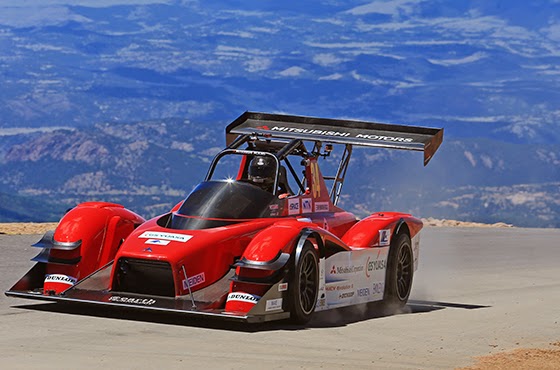
Mitsubishi Motors Corporation remains convinced of the virtues of motor sports to improve the breed and whilst the glorious days of the Dakar Rally and the World Rally Championship are long gone for Mitsubishi, the achievements of the innovative i-MiEV Evo electric monoposto racer at Pikes Peak still prove the point – especially for pioneering technologies.

In the case of the bigger SUV/crossover Outlander, cross country was deemed better suited – more so as it would be an unusual showcase for Outlander PHEV and its unique Plug-in Hybrid Electric drivetrain.

A pre-production Outlander PHEV was entered in the 2013 Asia Cross Country Rally (or “AXCR”) which took place August 10th – 16th between Thailand and Laos, post-event celebrations starting today in Japan.

An officially FIA sanctioned race, the AXCR is an Asian take at a Dakar-type of extreme cross country rallying, which started this year from Pattaya and finished in Pakse, in the southern part of Laos.

Over 6 days, competitors drove over 2,000km on various road surfaces and conditions including mountain roads, muddy jungle, river crossing, etc,…, making it a true challenge in terms of driving performance and endurance.

A reliable choice

Out of a total of 20 entries in the four-wheeled category (of which 19 finished), the Outlander PHEV attracted quite some attention as it was the only plug-in hybrid vehicle to participate, most competitors behind heavy-duty Diesel-powered pickup trucks.

Entered by a private team (“Two and Four Motor Sports”), backed by Mitsubishi Motors, the sole Outlander PHEV finished 17th overall with no failure: quite a success for what was essentially a standard car – including the Twin Motor 4WD plug-in hybrid electric drivetrain, as well as the Super All Wheel Control (S-AWC) system – the only modifications being the regular cross-country racing routine of upgraded shock absorbers and springs, roll cage, underfloor protection, exhaust and snorkel duct, etc,…

World markets

Completing such a tough rally with no problem whatesoever confirmed the durability as well as the dynamic performance of Outlander PHEV just a few months before it starts its commercial career in world markets.

Mitsubishi will launch Outlander PHEV sequentially, starting with selected PHEV markets (The Netherlands, Nordic countries, etc,…) from October 2013 onwards.

The other European markets will gradually follow from November 2013 to Q1 2014.

A week with the Mitsubishi iMiEV Plug-In Electric Car

Mitsubishi Australia were generous enough to recently loan EV News an iMiEV for a week.

On sale in Australia since 2010, the Mitsubishi iMiEV is based on a Japanese Kei class Mitsubishi I that was first released in 2006.

The iMiEV has the same sized lithium ion battery (16 kWh) as the Holden Volt but because it is a much smaller car and doesn't cart around a full sized 1.4 Lt petrol engine range extender the iMiEV weighs only 1,080 kg Vs 1,715 kg for the Volt. Where the Volt routinely achieves 70 - 80 km from a full charge in EV mode the book spec for the iMiEV is 155 km which is approximately twice the distance for the same battery capacity.

For a 5 door hatchback with only 47 kw (63 hp) and 180 Nm (133 lb/ft) from it's BLDC permanent magnet electric motor mated to a 7.065:1 single speed reduction gearbox, acceleration, while not startling off the line, is very impressive above 50 km/h right up to the cars top speed of 130 km/h. The combination of small road foot print and brilliant mid-speed acceleration brings a whole new dimension to 'gap-shooting' in heavy urban traffic.

The iMiEV's dash board instruments aren't as flash as a Volt with a basic set of segmented LCD meters instead of the all-singing all-dancing colour graphics of the Volt, but the relevant information like State Of Charge (SoC), energy consumption and predicted range are all present.

During our week long test drive we didn't quite get a handle on the algorithm behind the iMiEVs range meter. Driving the iMiEV on surface roads at speeds below 60 km/h with the 'gear' selector in the 'B' maximum brake regeneration position, it was possible to not only travel many kilometers without the indicated range changing at all, but we even managed to leave one morning with a full change indicating 106 km range and travelled to our destination 24 km away having used 2 bars on the battery meter (12.5%) with predicted range having gone UP to 113km by the time we arrived?

While low speed urban driving is definitely the iMiEV's forte, high speed motorways are not. We all know that aerodynamic drag increases in proportion to the square of speed ie doubled speed results in four times as much drag. Unfortunately, despite the blunt nose and steeply raked windscreen the iMiEV's coefficient of drag is no better than a large family sedan @ 0.33 Cd. We even double checked by multiplying the frontal cross sectional area to get the CdA figure but the result was still about equal.

Aside from the fact it doesn't have a cruise control which is unusual for a modern car, the range meter plummets when driven for sustained periods above 100 km/h. This serves as a graphic illustration of the extra loads ALL cars face at higher speeds. It only becomes much more noticeable in the iMiEV because a/ The battery capacity is equivalent to having a 1.5 litre fuel tank (petrol contains 10 kWh per litre) b/ ICE cars are so inefficient at low speeds compared to the iMiEV the difference between high and low speed fuel consumption of an ICE car isn't as noticeable as with the iMiEV.

Like Charging an iPhone

Here in Australia 240 VAC is the standard voltage that all appliances run off so the iMiEV can be fully changed in 8 hours using a standard 10 amp supply (although the iMiEV lead has a 15A plug). In the week we had the car we never used much more than ½ the battery on any given day of running errands so plugging it in for a 4 hour re-charge didn't seem much different to plugging in the iPhone / iPad on a daily basis.

The iMiEV has 2 charge sockets, one on either side of the car, with 240v on the drivers (right) side and a large CHAdeMO charger socket under the left hand side filler flap.

In order to test how practical fast charging is we took a drive to the the NRMA DC Fast Charger installed across the road from their North Strathfield head office. Arriving with 55% charge remaining the battery quickly accepted the 359 volts / 125 amps on offer and was topped up to 80% in 11 minutes flat. While the NRMA fast charger is located near a popular restaurant/cafe precinct, and is free of charge to use, 10 minutes isn't even enough time for a coffee although a full 20 min charge might allow enough time for a stroll to get a cappuccino.

With an introduction price of A$65,000, which was reduced to A$48,880 in 2011, the Mitsubishi iMiEV hasn't exactly been selling like hot cakes with only 227 cars delivered locally. Yet 33,000 have been sold worldwide including Peugeot and Citroen versions with Japan, France and Norway being the top selling countries.

Mitsubishi Australia are now selling the last of their 70 remaining iMiEVs and have no plans to order more unless there is customer demand. Dealers have reduced the new price to A$24,990 with rumours doing the rounds that an ex-demo with 10k on the clock can be had for as little as A$20k.

Sure it is a first generation EV in a market where the technology is evolving rapidly, but with local fuel prices currently above 2008 levels and oil prices having just passed A$120, anything electrically powered is looking better by the day.

I certainly wasn't keen to return the iMiEV, which cost approx $2.00 a day to charge, to resume pumping the usual $80 worth of fuel per week. Anyone with a roof-top PV solar system should be giving an iMiEV serious consideration as they can dramatically shorten the payback period of the PV system by eliminating fuel costs instead of utility bills and effectively power the iMiEV free of charge for the next 10-20 years. The EV grin as you drive past $1.70/Lt fuel billboards is almost priceless.

A week with the Mitsubishi iMiEV Plug-In Electric Car

Mitsubishi Australia were generous enough to recently loan EV News an iMiEV for a week.

On sale in Australia since 2010, the Mitsubishi iMiEV is based on a Japanese Kei class Mitsubishi I that was first released in 2006.

The iMiEV has the same sized lithium ion battery (16 kWh) as the Holden Volt but because it is a much smaller car and doesn't cart around a full sized 1.4 Lt petrol engine range extender the iMiEV weighs only 1,080 kg Vs 1,715 kg for the Volt. Where the Volt routinely achieves 70 - 80 km from a full charge in EV mode the book spec for the iMiEV is 155 km which is approximately twice the distance for the same battery capacity.

For a 5 door hatchback with only 47 kw (63 hp) and 180 Nm (133 lb/ft) from it's BLDC permanent magnet electric motor mated to a 7.065:1 single speed reduction gearbox, acceleration, while not startling off the line, is very impressive above 50 km/h right up to the cars top speed of 130 km/h. The combination of small road foot print and brilliant mid-speed acceleration brings a whole new dimension to 'gap-shooting' in heavy urban traffic.

The iMiEV's dash board instruments aren't as flash as a Volt with a basic set of segmented LCD meters instead of the all-singing all-dancing colour graphics of the Volt, but the relevant information like State Of Charge (SoC), energy consumption and predicted range are all present.

During our week long test drive we didn't quite get a handle on the algorithm behind the iMiEVs range meter. Driving the iMiEV on surface roads at speeds below 60 km/h with the 'gear' selector in the 'B' maximum brake regeneration position, it was possible to not only travel many kilometers without the indicated range changing at all, but we even managed to leave one morning with a full change indicating 106 km range and travelled to our destination 24 km away having used 2 bars on the battery meter (12.5%) with predicted range having gone UP to 113km by the time we arrived?

While low speed urban driving is definitely the iMiEV's forte, high speed motorways are not. We all know that aerodynamic drag increases in proportion to the square of speed ie doubled speed results in four times as much drag. Unfortunately, despite the blunt nose and steeply raked windscreen the iMiEV's coefficient of drag is no better than a large family sedan @ 0.33 Cd. We even double checked by multiplying the frontal cross sectional area to get the CdA figure but the result was still about equal.

Aside from the fact it doesn't have a cruise control which is unusual for a modern car, the range meter plummets when driven for sustained periods above 100 km/h. This serves as a graphic illustration of the extra loads ALL cars face at higher speeds. It only becomes much more noticeable in the iMiEV because a/ The battery capacity is equivalent to having a 1.5 litre fuel tank (petrol contains 10 kWh per litre) b/ ICE cars are so inefficient at low speeds compared to the iMiEV the difference between high and low speed fuel consumption of an ICE car isn't as noticeable as with the iMiEV.

Like Charging an iPhone

Here in Australia 240 VAC is the standard voltage that all appliances run off so the iMiEV can be fully changed in 8 hours using a standard 10 amp supply (although the iMiEV lead has a 15A plug). In the week we had the car we never used much more than ½ the battery on any given day of running errands so plugging it in for a 4 hour re-charge didn't seem much different to plugging in the iPhone / iPad on a daily basis.

The iMiEV has 2 charge sockets, one on either side of the car, with 240v on the drivers (right) side and a large CHAdeMO charger socket under the left hand side filler flap.

In order to test how practical fast charging is we took a drive to the the NRMA DC Fast Charger installed across the road from their North Strathfield head office. Arriving with 55% charge remaining the battery quickly accepted the 359 volts / 125 amps on offer and was topped up to 80% in 11 minutes flat. While the NRMA fast charger is located near a popular restaurant/cafe precinct, and is free of charge to use, 10 minutes isn't even enough time for a coffee although a full 20 min charge might allow enough time for a stroll to get a cappuccino.

With an introduction price of A$65,000, which was reduced to A$48,880 in 2011, the Mitsubishi iMiEV hasn't exactly been selling like hot cakes with only 227 cars delivered locally. Yet 33,000 have been sold worldwide including Peugeot and Citroen versions with Japan, France and Norway being the top selling countries.

Mitsubishi Australia are now selling the last of their 70 remaining iMiEVs and have no plans to order more unless there is customer demand. Dealers have reduced the new price to A$24,990 with rumours doing the rounds that an ex-demo with 10k on the clock can be had for as little as A$20k.

Sure it is a first generation EV in a market where the technology is evolving rapidly, but with local fuel prices currently above 2008 levels and oil prices having just passed A$120, anything electrically powered is looking better by the day.

I certainly wasn't keen to return the iMiEV, which cost approx $2.00 a day to charge, to resume pumping the usual $80 worth of fuel per week. Anyone with a roof-top PV solar system should be giving an iMiEV serious consideration as they can dramatically shorten the payback period of the PV system by eliminating fuel costs instead of utility bills and effectively power the iMiEV free of charge for the next 10-20 years. The EV grin as you drive past $1.70/Lt fuel billboards is almost priceless.

Toyota Nissan Honda & Mitsubishi co-operate to promote plug-in cars

Four of Japan's leading carmakers, including Toyota, today announced a plan to expand sales of next-generation green vehicles by co-operating on the development of electric charging stations.

Toyota, along with Nissan, Honda and Mitsubishi, said there is a critical need to develop an infrastructure in Japan for vehicles that can be charged from a power point, such as plug-in hybrids and electric cars.

The carmakers said they will work with the Japanese Government to more than double the number of charging outlets to at least 4,000 quick chargers and 8,000 regular chargers.

They said an expanded charging network would maximise the electric-only driving performance and combined fuel economy of plug-in hybrids.

It would also enable motorists to extend the driving range of electric vehicles, which do not produce any tailpipe emissions.

Normal chargers would be installed in commercial facilities such as large shopping malls or highway service areas where motorists typically stopped for long periods.

Quick chargers would be installed for shorter-duration stops such as highway parking areas, convenience stores and fuel stations.

The carmakers will temporarily bear part of the installation and maintenance costs that are not covered by government subsidies of 100.5 billion yen ($1.1 billion) announced for 2013-14.

Their co-operation is based on an understanding that the charging infrastructure has public value and enhancing it should be done quickly during the limited period the subsidies are available.

The collaboration extends to car owners being able to use the same credit card for payment at all charging stations.

The Japanese government would like to see sales of these next-generation cars accounting for 15-20 per cent of new-car sales in 2020.

The four carmakers are committed to developing a more user-friendly charging infrastructure and to contributing to a society making maximum use of electric-powered vehicles.

Next Mitsubishi Evo to be 500 hp hybrid Nissan GT-R rival

The next-gen Mitsubishi Evo will allegedly feature a hybrid setup good enough for about 500 bhp (373 kW).

The standard Lancer will be globally launched sometime next year, while a plug-in hybrid model is already in the works. In addition, Autocar says Mitsubishi executives are also analyzing the prospects of a high-performance gasoline-electric variant with technology derived from the MiEV Evolution II Pikes Peak.

Although it's in an early development stage, the new Evo is expected to offer better all-wheel drive performance than its predecessor, as well lower CO2 emissions and the possibility of running on electric power. If green-lighted for production, the car's styling could be influenced from the 2008 Concept-RA.

Before a new Evo is out, Mitsubishi is planning a Lancer PHEV with a 2.0-liter gasoline engine working together with two 80 bhp (60 kW) electric motors. The setup should enable the car to return at least 150 mpg UK (125 mpg US or 1.8 liters / 100 km) with CO2 emissions of 50 g/km and a 40-mile (64 km) electric range.

Source: autocar.co.uk

Mitsubishi Top Time Sheets in Pikes Peak Qualifying [VIDEO]

Mitsubishi's 500 hp AWD MiEV Evolution II's have taken the two fastest times in the Electric Class on Day 2 Practice/Qualifying on the bottom section of the Pikes Peak course. Driven by two-time Dakar rally winner Hiroshi Masuoka and Pikes Peak motorbike specialist Greg Tracy, the team say their firm intention is to break Toyota’s EV course record of set in 2012.

The TMG EV P002 electric race car posted the fourth-best qualifying time behind ‘MONSTER’ Tajima.

Rod Millen, driving the TMG-developed car, posted a time of just over four minutes (4:04.331) on the lower portion of the 156-turn course, more than 25 seconds faster than last year’s qualifying effort.

The TMG EV P002, which set the Electric Class record in 2012 with driver Fumio Nutahara (10:15.380), features an ugraded electric powertrain while aerodynamic improvements have been made by Toyota Racing Development USA.

  • 1st, GREG TRACY, MIEV Evolution II, 3:56.287
  • 2nd, HIROSHI MASUOKA, MIEV Evolution II, 3:57.777
  • 3rd, NUBOHIRO TAJIMA, Pikes Peak Special, 3:58.189
  • 4th, ROD MILLEN, Toyota TMG EV P002, 4:04.331
  • 5th, JANIS HORELIKS, PP01, 4:19.488
  • 6th, IKUO HANAWA, HER-02, 4:46.789
  • 7th, ROY RICHARDS, Fit-EV, 5:29.430
  • Bay Area local governments deploying 50x i-MiEVs

    Four San Francisco Bay Area local government fleets—San Jose, Los Gatos, Campbell and Mill Valley—are deploying a total of 50 Mitsubishi i-MiEV EVs, representing the largest municipal fleet deployment of light-duty all-electric vehicles (EVs) in the US to date.

    Supporting the region’s efforts to establish the Bay Area as the “EV Capital of the US” and Governor Brown’s goal of 1.5 million EVs on California roads by 2025, this deployment is one in a series the BACC and partners are facilitating, which collectively could result in 250+ EVs deployed over the next 12 months for valuable potential impacts including fuel cost savings of nearly $2 million and avoidance of nearly 6 million pounds of CO2 over five years.

    The vehicles were secured under highly favorable lease terms, removing the upfront cost barrier and risk of traditional vehicle procurement. These unique lease options are allowing participating municipalities to expand on their already progressive sustainability efforts, while delivering the significant operations, maintenance and fuel cost savings associated with EVs.

    The City of San Jose, which received 38 of the 50 vehicles, is aiming to power 100 percent of its fleet with alternative fuel vehicles by 2022 as a part of its Green Vision, and is currently 40 percent of the way toward achieving this goal. “We appreciate the opportunity to secure these new vehicles without any upfront expenditure,” said San Jose Mayor Chuck Reed. “By replacing older, less efficient vehicles with clean EVs, we reduce emissions but more importantly, save on fuel costs.”

    This deployment also is enabling smaller municipalities to both demonstrate the benefits of EVs in fleets and emerge as sustainability leaders. “The Town of Los Gatos is pleased to participate in this initiative to add electric vehicles to the fleet, which lowers our carbon footprint in keeping with our Sustainability Plan,” said Town of Los Gatos Mayor Barbara Spector. “In addition to being nearly 40 percent less expensive to fuel, these vehicles will significantly reduce the Town’s greenhouse gas emissions – over three years our five vehicles will avoid nearly 20,000 lbs of CO2.”

    “Many of our fleet vehicle routes are predictable and take place within the city itself,” explained City of Campbell Mayor Evan Low. “These i-MiEVs are ideally suited for such applications and, using the network of 11 charging stations we’ve installed, we’ll be able to charge the vehicles throughout

    Rugby player squeezes into a Mitsubishi iMiEV to promote EVs

    Australian Brumbies rugby union club player, Scott Fardy will lead a charge with a difference this month as he takes to the streets of Canberra in a 100% electric Mitsubishi i-MiEV.

    It’s all thanks to Rock Development Group and the ACT Electric Vehicle Council (the Council) to help support and promote electric vehicles as a viable transport alternative for the ACT.

    Scott Fardy said “When I travelled to Japan in 2009 I couldn’t believe how many electric vehicles were on the road. I’m so excited that I get to cruise the streets of my home town in one for a month.”

    Scott will share his electric vehicle experience via the social media platform Twitter using the handle @scottfardy and hashtag #EVsrock. “I thought this would be a really fun and interactive way to share my adventures with everyone and I really hope to hear from lots of other Twitter users who see me cruising around town.”

    The Council approached Scott because he has a demonstrated commitment to promoting community-orientated charitable and environmental causes, and educating youth about the benefits of team sport in Canberra and the surrounding regions.

    “To me, electric vehicles are a no brainer.” Scott added. “I know that at times I cringe at petrol prices. An electric car sure has less of an impact on your wallet. I couldn’t believe it when the Council told me I could charge it up overnight for less than the price of a pie at a Brumbies game!”

    The ACT has the cheapest electricity in the country whereas the price of petrol is 10c/L higher than the national average at $1.47 a litre. This is an indicator that Canberra has good reason to consider an electric vehicle when making a new car purchase.

    Other benefits of owning a 100% electric vehicle in the ACT are that under the Green Vehicle Scheme no duty is payable at registration time. not to mention that going electric helps reduce vehicle pollution and decrease carbon emissions.

    Follow Scott’s electric vehicle adventures on Twitter: @scottfardy and #EVsrock

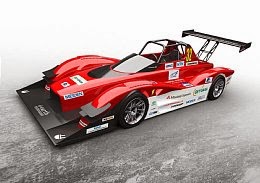
    Mitsubishi to Enter 2x AWD 545 hp MIEV evo II in 2013 Pikes Peak

    Mitsubishi Motors Corporation (MMC) will compete in the 2013 edition of the world-famous Pikes Peak International Hill Climb*1 (Pikes Peak, held from June 25 to June 30) with the MiEV Evolution II...

    [[ This is a content summary only. Visit my website for full links, other content, and more! ]]

    2013 Mitsubishi Concept CA-MiEV

    The Concept CA-MiEV concept car gives an indication of the direction MMC (which launched its i-MiEV in 2009), believes EVs will take in the near future. The system is fitted with a 28 kWh Li-ion...

    [[ This is a content summary only. Visit my website for full links, other content, and more! ]]